Buying an Off-Plan Villa in Bali: What to Know
Buying an off-plan villa in Bali? See how foreigners own via leasehold, check the land and developer, and budget rental costs before you pay.
 KAMRITA team10 min read ·
 Enlarge image
Contents14 sections
- What an off-plan villa in Bali actually is
- Why off-plan villas in Bali attract foreign investors
- Can a foreigner own a villa in Bali? Leasehold vs freehold
- Step 1 — Check who owns the land
- Step 2 — Investigate the developer
- Step 3 — Understand exactly what you are buying
- Step 4 — Review the contract and do due diligence before paying
- How stage payments protect your money
- Rental yield, management and running costs
- Common mistakes when buying off-plan in Bali
- How to buy an off-plan villa remotely: the process
- Frequently Asked Questions
- The takeaway
- Next step
Buying an off-plan villa in Bali means paying for a home that is still being built, so the deal rests on documents and the developer's record rather than a finished building you can walk through.
What an off-plan villa in Bali actually is
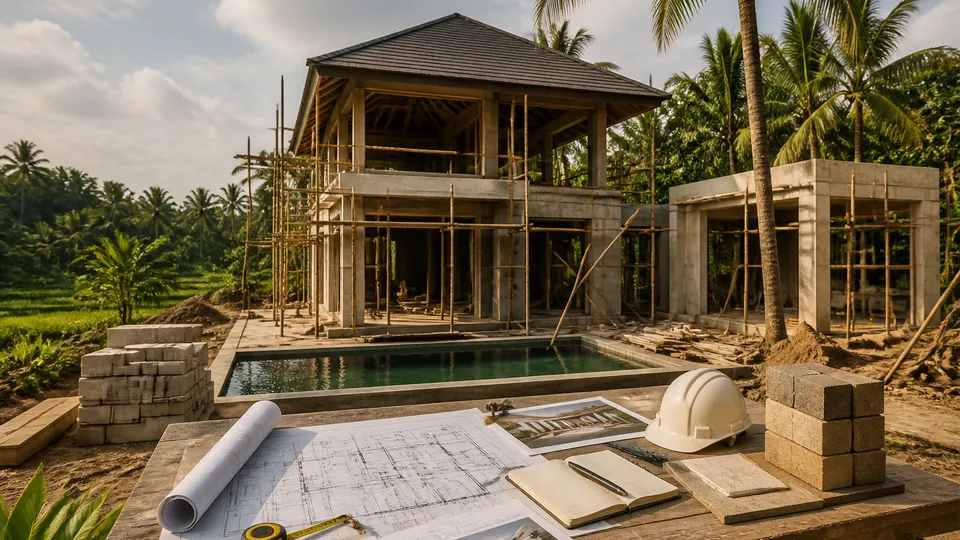
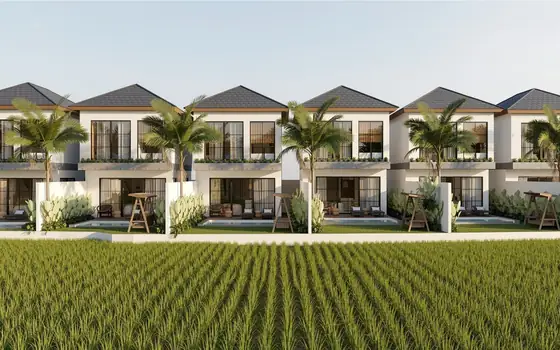
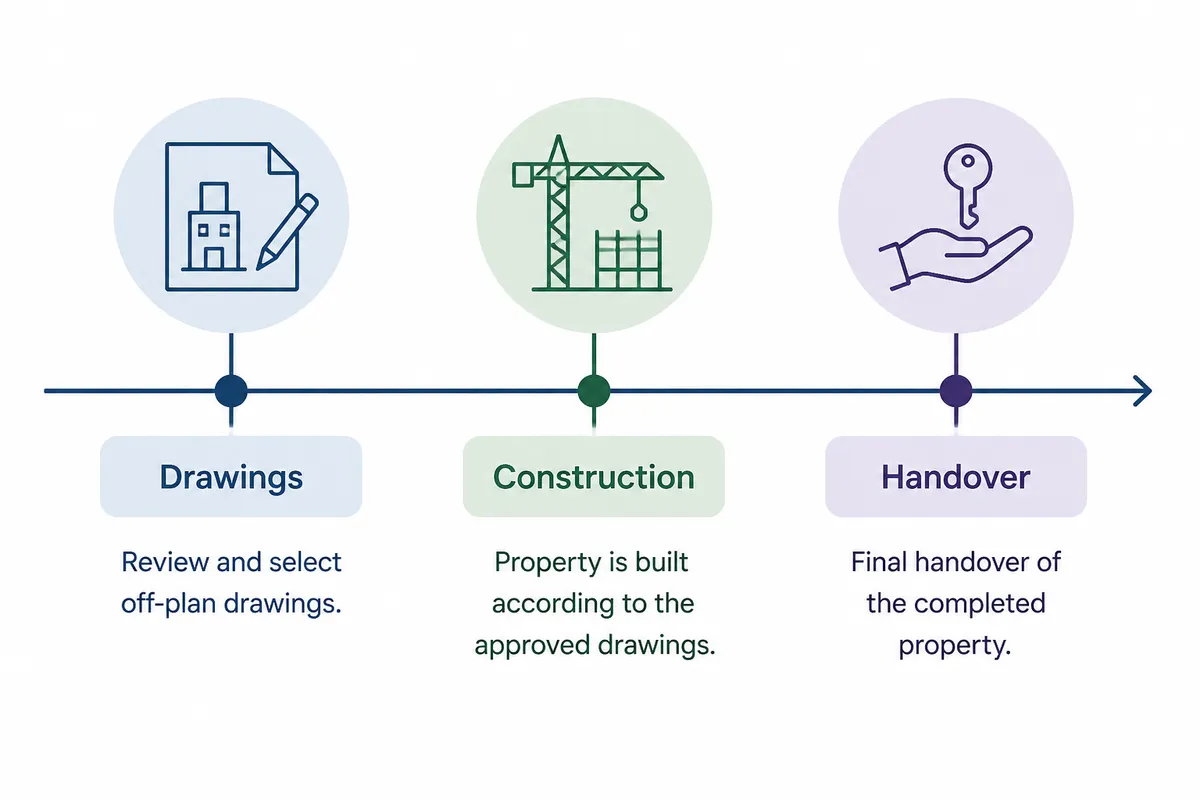
An off-plan villa is a property you buy before or during construction, based on plans, renders and a written specification rather than a finished building. You commit on paper — a layout, an area, a finish schedule and a delivery date — and the villa is built around that agreement.
This matters because almost everything you rely on is a promise backed by documents, not something you can inspect. Instead of viewing a completed house, you are reading a contract, a building permit and a developer's past work. The upside is that you enter earlier in the project; the trade-off is that your Legal due diligenceAn independent lawyer’s check before purchase: who holds the land, its zoning and permits, and whether there are mortgages, seizures or court disputes. has to replace the walk-through you can't do.
 Enlarge image
Why off-plan villas in Bali attract foreign investors
Off-plan appeals to foreign buyers because it lets you shape the purchase while it is still on paper — you lock in a specific layout and finish and spread payment across the build instead of handing over everything for a finished house. For someone buying from another country, that staged structure fits a remote deal better than a single wire transfer.
It also lets a remote buyer line up quality checks at agreed build stages, rather than judging the villa only once it is finished.
 Enlarge image
Can a foreigner own a villa in Bali? Leasehold vs freehold
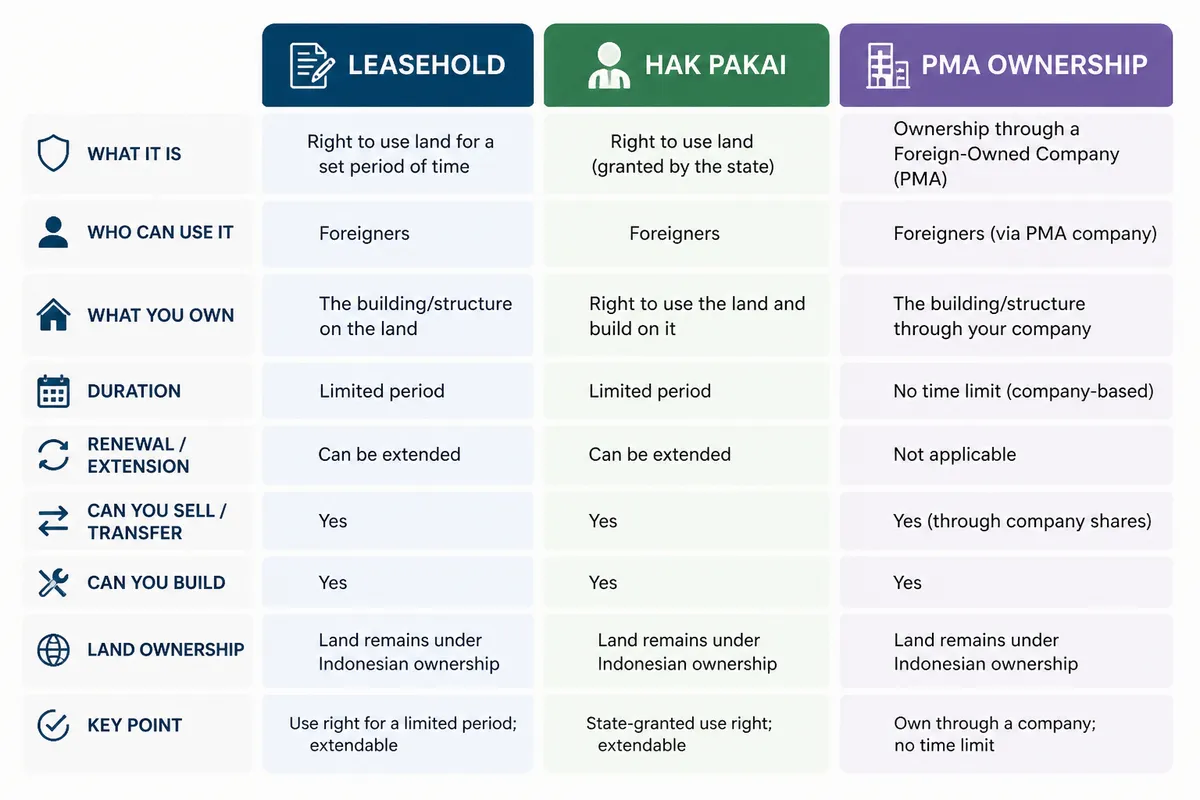
Foreigners cannot hold Freehold (Hak Milik)Full ownership of land. Under Indonesian law it is available only to Indonesian citizens, so foreign buyers in Bali work with leasehold. (Hak Milik) land in Indonesia and usually buy either on a long-term Leasehold (Hak Sewa)A long-term lease of land, signed before a notary. The land itself is not bought. For CITRINE the land lease runs from 28.11.2025 to 28.11.2055, with a right to extend for 30 years at the market price of land. or through a foreign-owned company. The practical choice comes down to two routes:
- Leasehold (Hak Sewa). This is a contract-based right to use a property for a set term rather than ownership of the land, and Hak Pakai gives a foreigner a registered right to use certain residential property, according to Expatica, August 2026. Leasehold is the default route for most foreigners buying a villa in Bali, according to Emerhub, January 2026.
- PMA company. Setting up a foreign-owned company (PT PMAPerseroan Terbatas Penanaman Modal Asing: an Indonesian limited company with foreign shareholders. KAMRITA works as PT KAMRITA REAL ESTATE INVESTMENTS, a PT PMA.) is described as the only legal way for a foreigner to own a villa in Bali, according to Emerhub, January 2026.
Which fits you depends on how long you want to hold the property and whether you intend to rent commercially. If you want a straightforward personal-use hold for a defined period, leasehold is the common path; if you plan to run the villa as a business, the PMA route is the one to discuss with your Notary and PPATA notary (notaris) certifies agreements, including a land lease. A PPAT (Pejabat Pembuat Akta Tanah) is an official authorised to draw up deeds on land rights. In Bali one person often holds both roles.. Either way, confirm the exact right and term in writing before you move on.
 Enlarge image
Step 1 — Check who owns the land
Verify who legally owns the land and what certificate type sits under the villa before you commit any funds. This is the first check because no contract fixes a weak title.
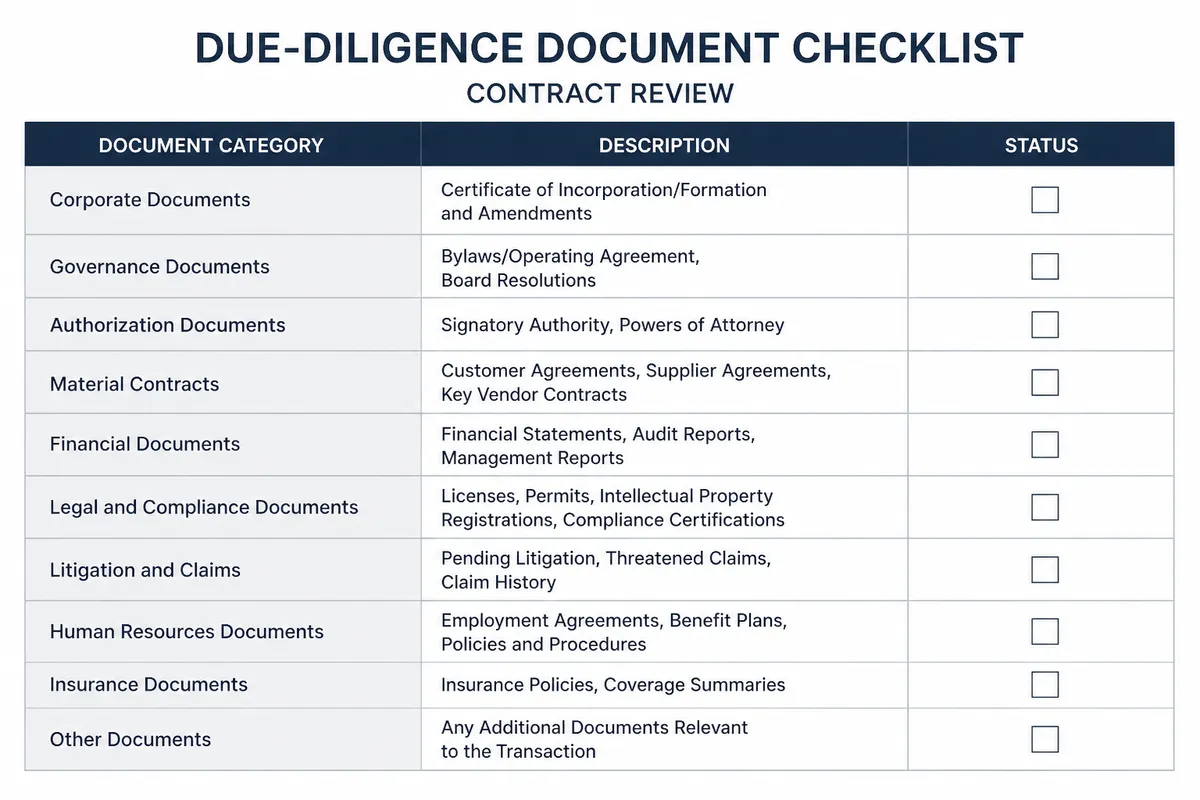
In practice, run a short due-diligence checklist before you transfer anything:
- Land title — confirm the certificate type under the villa and that the seller is the registered holder.
- Developer — check the track record and who actually builds and delivers the project.
- Permits — make sure the building permit and the certificate of worthiness for the finished villa are in place.
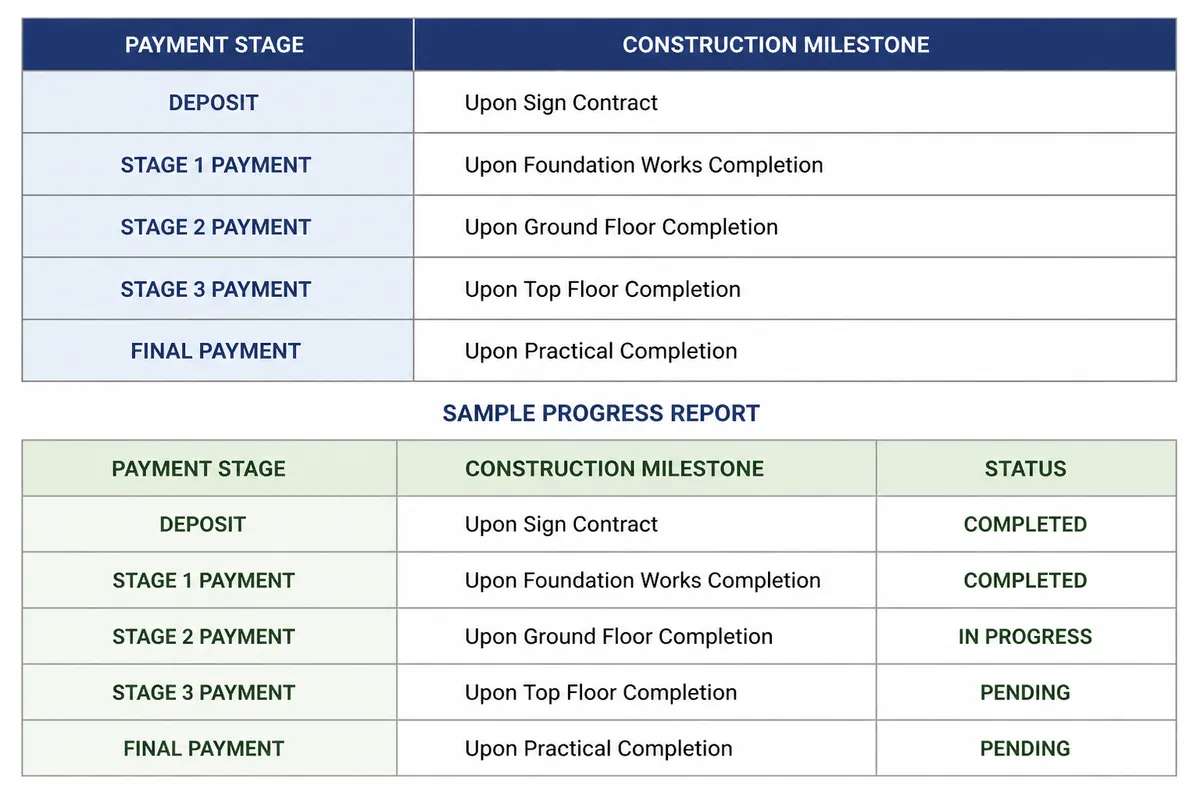
- Contract — read who owns what, the Payment by construction stageCITRINE is paid in five instalments, 30/20/20/20/10%, each tied to a completed construction stage rather than a calendar date. and what happens if delivery slips.
If any line can't be answered on paper, treat it as a reason to pause rather than something a contract will fix later.
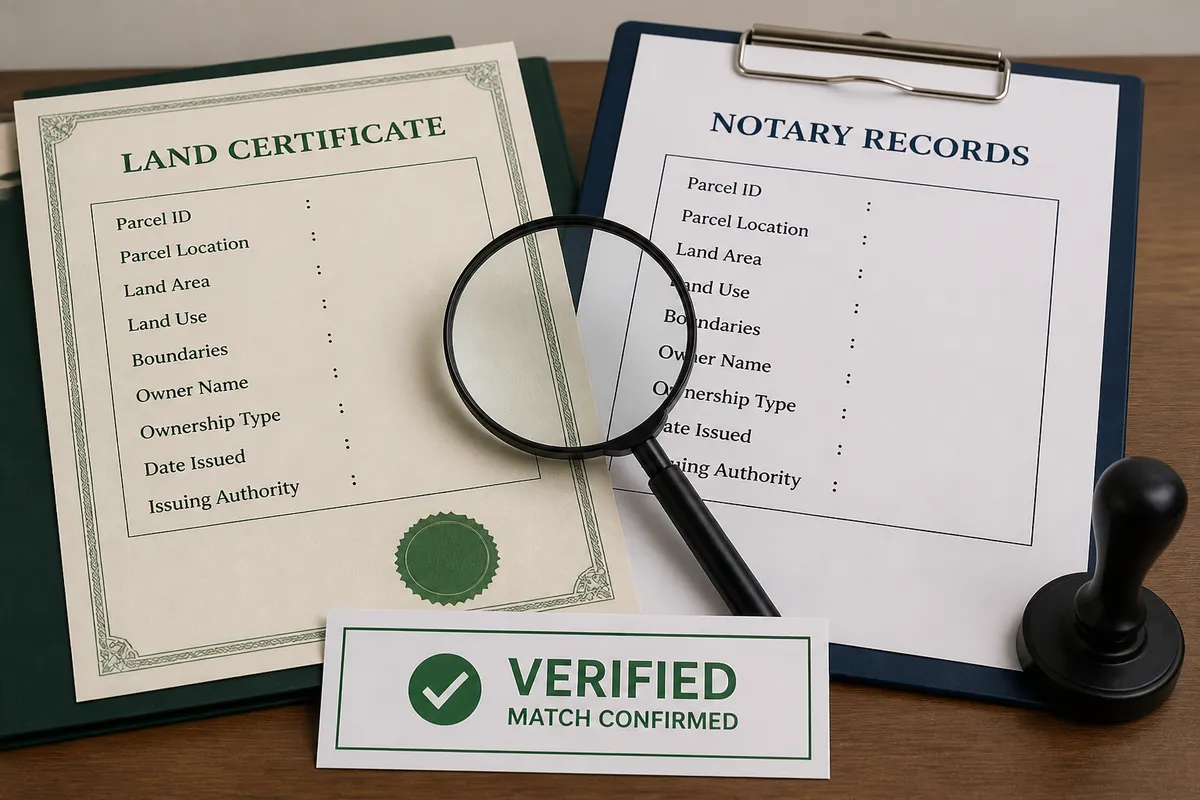
Request the land certificate — a freehold SHM or the leasehold document — and confirm the seller's name through a notary (PPAT). The check has passed when the owner named on the certificate matches the seller, and the lease term and plot area match what the listing promised. Keep in mind this won't surface undisclosed encumbrances on its own; for that you need a full title search through the notary. If the name or the area doesn't line up, stop there and get it explained before anything else.
 Enlarge image
Step 2 — Investigate the developer
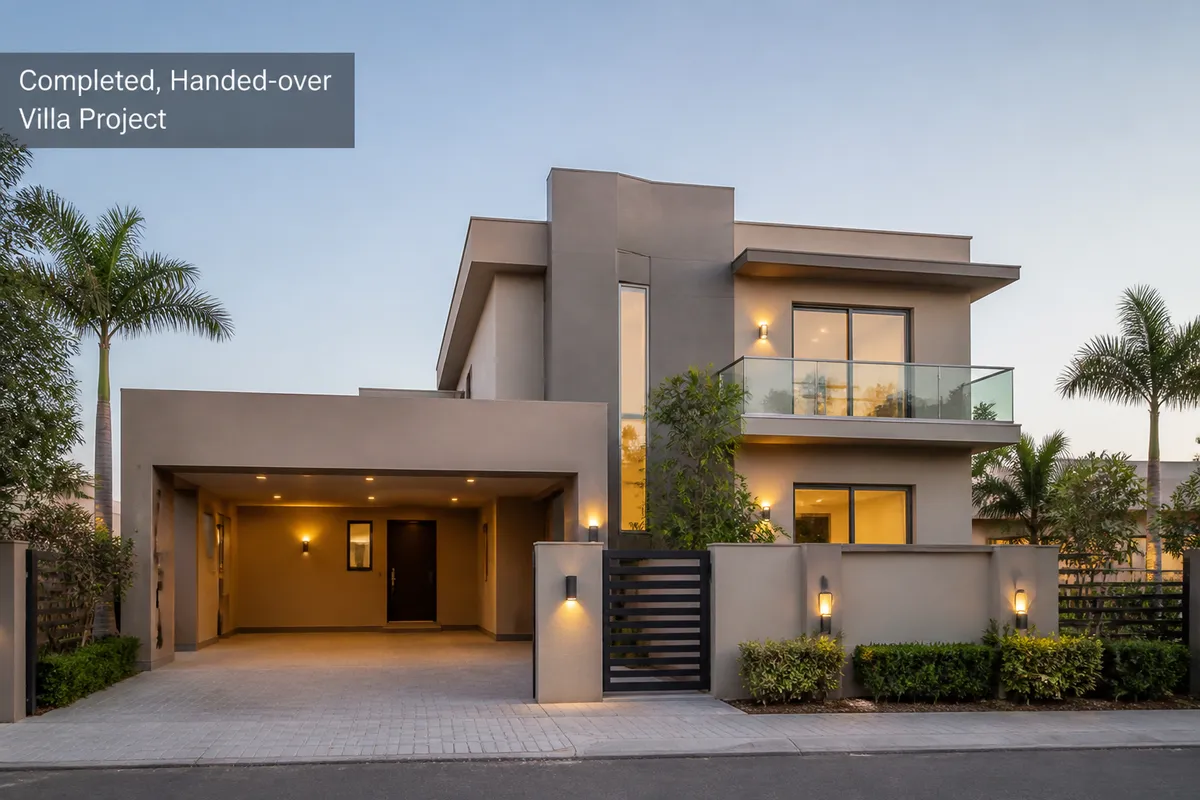
Investigate the developer's track record before you pay, because on an off-plan deal their delivery history is most of what you are buying. A developer who can show finished, occupied villas is a different proposition from one selling only renders.
Check completed projects, actual delivery dates and verified guest or buyer reviews — not testimonials on the developer's own site, but reviews you can trace to a platform. You are reassured when the developer can point to handed-over villas and documented feedback. A short history isn't automatically a problem if stage payments and regular reporting are in place, but the absence of any finished work is a reason to slow down.
 Enlarge image
Step 3 — Understand exactly what you are buying
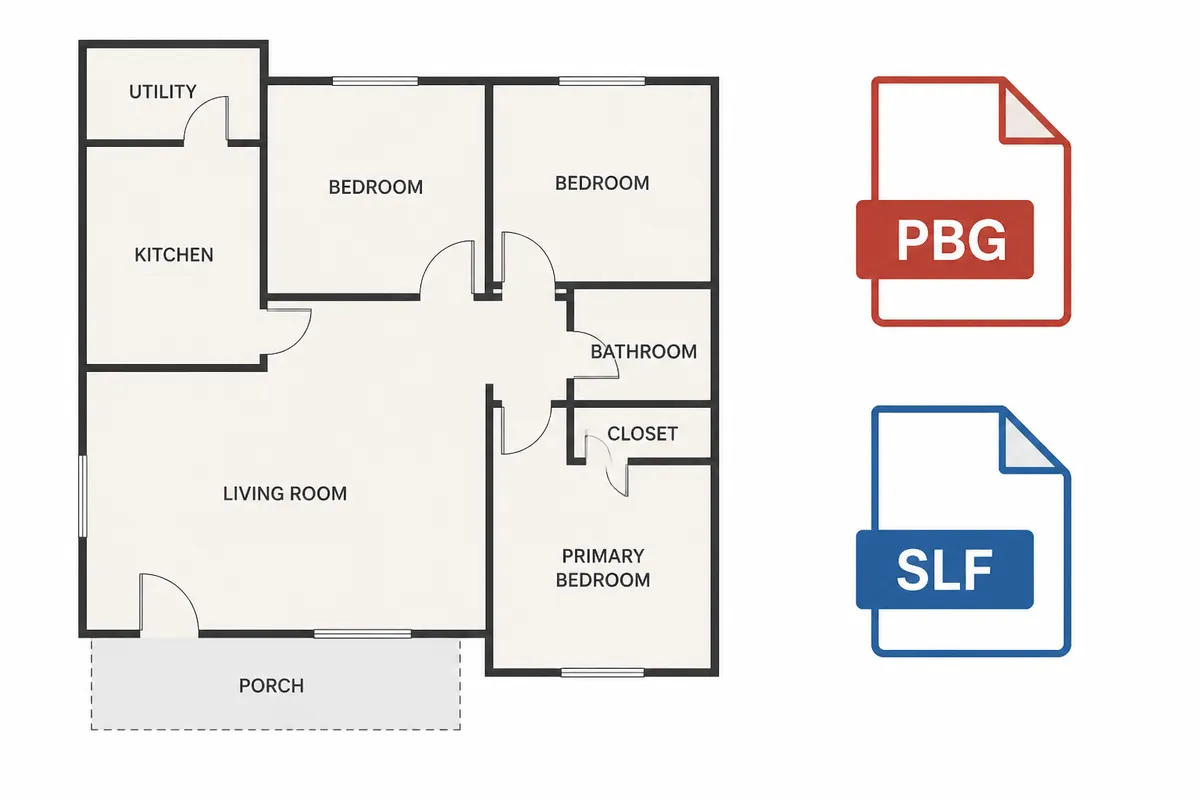
Confirm the precise thing you are buying — the layout, the area in square metres, the finish schedule and the required building permit. On an off-plan deal the specification is the product, so vague descriptions are a warning sign.
Match the contract's spec sheet against the PBGPersetujuan Bangunan Gedung, the Indonesian building approval that replaced the IMB in 2021. It confirms that the design meets technical standards. CITRINE: PBG No. SK-PBG-510405-06082026-006 of 06.08.2026. building permit and the agreed finishes, line by line. You are on solid ground when a valid PBG exists and matches the villa's size, number of storeys and intended use. One limit worth knowing: the SLF certificate of worthiness is issued only after the building is finished, so you cannot verify it up front — you confirm the PBG now and expect the SLF at completion.
 Enlarge image
Step 4 — Review the contract and do due diligence before paying
Have the contract independently reviewed before you transfer any significant sum. The person reviewing it should not be acting for the seller.
Engage your own notary or a property lawyer to go through both the lease and the build contract. The review has done its job when the payment schedule, the penalties for late delivery and the handover terms are written down and you understand each one. A contract review cannot repair a bad underlying title, though — that is why the land check in Step 1 comes first. Read the penalty and refund clauses especially closely: they decide what happens if the build slips.
Putting the checklist to work: a worked example. Say a listing offers an off-plan pool villa with full finishing, and you run the four checks in order. Land: the notary finds that the certificate names a person other than the seller — you pause and ask for the document that links them before anything else. Developer: the seller shows renders but no handed-over villa you can trace on a review platform — you slow down and ask to see completed work. Specification: the contract describes the villa one way, while the PBG lists a different floor area — you ask for the mismatch to be corrected in writing. Contract: the payment schedule is there, but nothing says what happens if delivery is late — you ask for penalty and refund terms before signing. Only when all four lines are answered on paper do you release the first stage payment; while any line stays open, the deal waits.
 Enlarge image
How stage payments protect your money
Stage payments protect a buyer by tying each release of funds to a construction milestone that has actually been completed, instead of paying everything up front. If the project stalls, you have not already handed over the full amount.
In practice the build is broken into stages — foundations, structure, roof, finishing — and payment for each is due only once that stage is verifiably done. The stronger versions of this model pay the money to a licensed general contractor and back each stage with photo and video reporting, so a remote buyer can see progress without flying in. When you compare developers, look at how granular the stages are and what proof of completion you receive before each release.
 Enlarge image
Rental yield, management and running costs
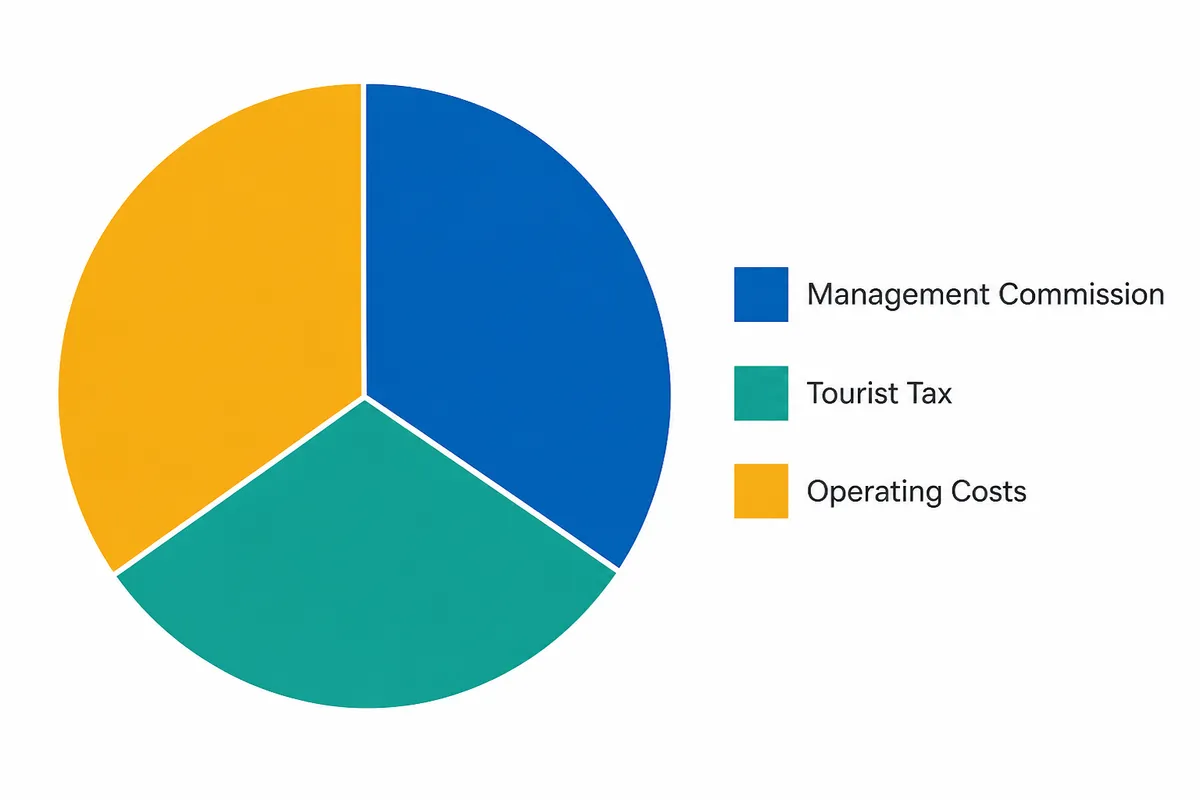
Rental income only begins once the villa is finished and handed over, and before you model returns you should map the recurring costs that come off the top — ongoing management and upkeep reduce gross income every month. Treat yield as a realistic range to test, not a promise — OccupancyThe share of nights a villa is booked over a period. Green Harmony: 88.1% on average, January–July 2025. Past results, not a forecast. and nightly rates move with the season.
The running costs to budget for typically include:
- the Management companyThe company that runs a villa as a rental after handover: bookings, guests, cleaning, maintenance and the monthly owner report. It is paid a share of revenue.'s commission on rental revenue;
- upkeep and repairs that keep the villa ready for guests;
- utilities and the villa's other operating bills;
- any local taxes and permit fees that apply to your villa — ask your notary for the current list for your specific property rather than relying on a general guide.
Green Harmony Villas, a completed project, holds a 9.0 "Superb" score from 12 guest reviews on Booking.com. Two of those guests rated the stay 10/10 — one highlighted the rice-field view, cleanliness and privacy, another was happy with everything and singled out the pool. Ratings like these move over time, so read the current reviews yourself rather than taking a headline number on trust.
 Enlarge image
Common mistakes when buying off-plan in Bali
The costliest off-plan mistakes are trusting the marketing, skipping the legal checks and paying before those checks clear. Each one is avoidable with a slower process.
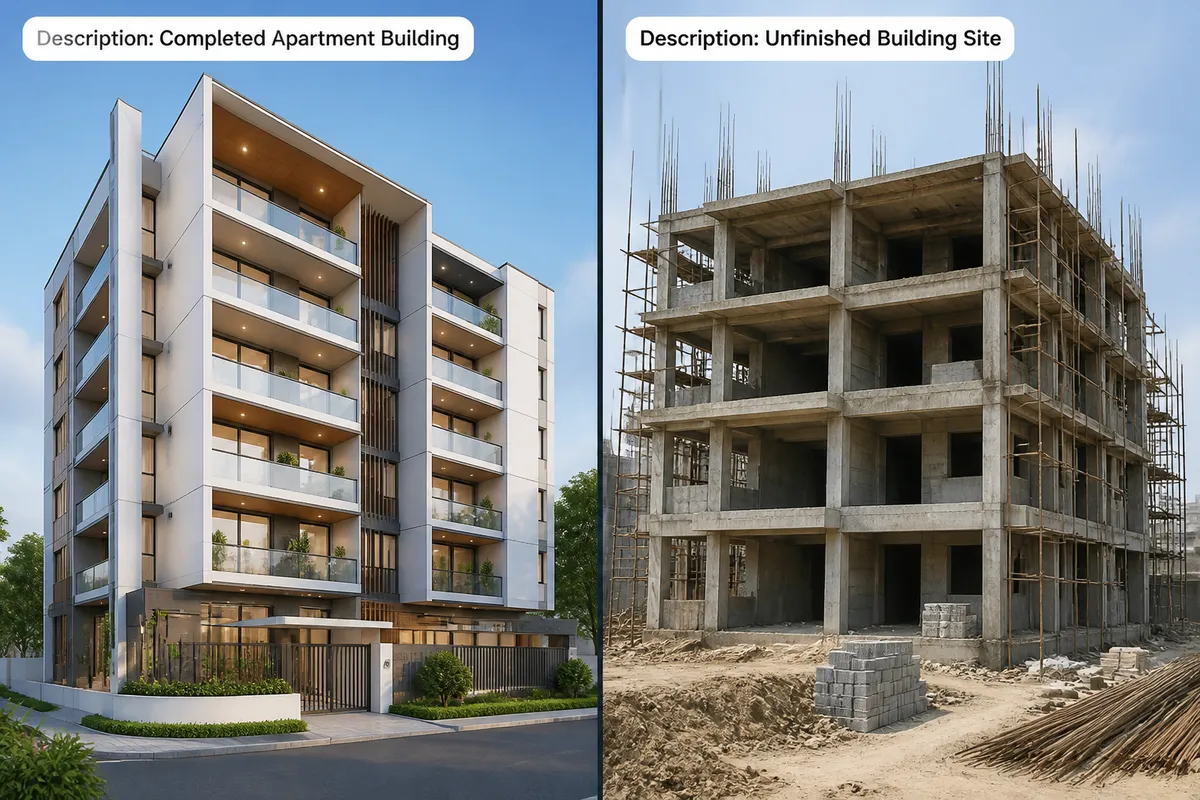
- Judging the villa by renderings alone. Don't rely on renders and brochure language to decide; inspect the developer's prior completed work and read the written specification. You are reassured when the finished quality of past projects matches what the renders promise.
- Skipping due diligence. Treating the land title, PBG and contract as formalities is how buyers inherit problems they can't fix later.
- Paying too early. Transferring a large sum before the title check and contract review are done removes your leverage if something turns out to be wrong.
 Enlarge image
How to buy an off-plan villa remotely: the process
Buying remotely works as an ordered sequence you can run from abroad, with your notary doing the on-the-ground verification. The steps below map to the checks earlier in this guide.
- Enquire and shortlist. Contact the developer, set your goal (rental, personal use or both) and request documents for the specific villa.
- Verify the land and permit. Have a notary confirm the certificate and owner and check the PBG, as in Steps 1 and 3.
- Vet the developer. Review completed projects and verified reviews before going further.
- Review the contract. Get an independent notary or lawyer to check the lease and build contract and confirm the payment schedule and penalties.
- Pay by stages and track progress. Release funds against completed construction stages and follow the reporting.
- Handover. Take delivery once the villa is finished and the SLF is in place, then appoint management if you are renting.
To keep a remote deal moving, responsiveness matters: our sales manager replies on WhatsApp and Telegram within 15 minutes during Bali hours, GMT+8.
Frequently Asked Questions
Can a foreigner legally own a villa in Bali? Not as freehold land — foreigners buy either on a long-term leasehold or through a PMA company, according to Emerhub, January 2026. What this answer doesn't settle is what happens at the end of a lease — whether you can extend it or pass it on to a buyer — so pin those terms down in the contract before you sign. Which route fits depends on whether you want personal use or to rent commercially. Confirm the exact structure with your notary before paying.
How long does a leasehold run? Leasehold is agreed for a fixed term written into the contract, so there is no single number — it is whatever the lease states, with any extension options spelled out. Because the term is contractual, read the renewal and transfer clauses as carefully as the headline length. Your notary should confirm the stated term matches the land certificate.
Is my deposit safe on an off-plan deal? It is safest when payments are tied to completed construction stages rather than paid in full up front, so an unfinished project does not mean lost money. Have the payment schedule and penalty clauses reviewed by your own lawyer before transferring anything. Never pay a large sum before the land title and contract checks are complete.
What's the difference between buying off-plan and buying a finished villa? Off-plan means committing to plans, renders and a specification before the building exists, whereas a finished villa can be inspected and often rented immediately. Off-plan lets you enter earlier and pay in stages but shifts the risk onto documents and the developer's record. The due-diligence steps in this guide are what close that gap.
The takeaway
Buying an off-plan villa in Bali as a foreigner is manageable when you treat it as a document deal: confirm the ownership route, check the land and the PBG, vet the developer's finished work, have the contract reviewed independently, and pay against completed stages rather than up front. Do those checks in order and you are deciding on evidence, not on a render.
If you want help applying this checklist to a specific project, send us the project name or listing along with any land certificate, permits and the draft contract you have, and we'll walk through the ownership structure and documents with you. Our sales manager replies on WhatsApp or Telegram within about 15 minutes, Bali time (GMT+8).
Next step
We build villas in Ubud and write about what we check on our own projects: land, permits, construction and the numbers of completed villas. About the team