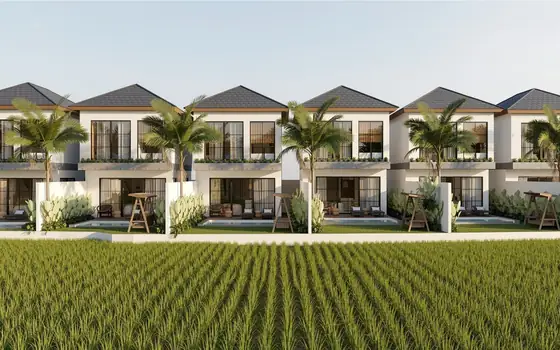
Building a Villa in Bali: Construction Process
Villa construction in Bali explained: build stages, timelines, permits, quality control and cost planning for foreign investors buying off-plan in Ubud.
 KAMRITA team8 min read ·
 Enlarge image
Contents10 sections
- What villa construction in Bali involves
- Land, lease and permits before you build
- Construction stages, step by step
- How long it takes: realistic timelines
- Quality control, stage payments and progress reports
- Costs to plan for (without the object price)
- How to choose a developer or contractor
- KAMRITA completed projects and results
- FAQ
- Next step
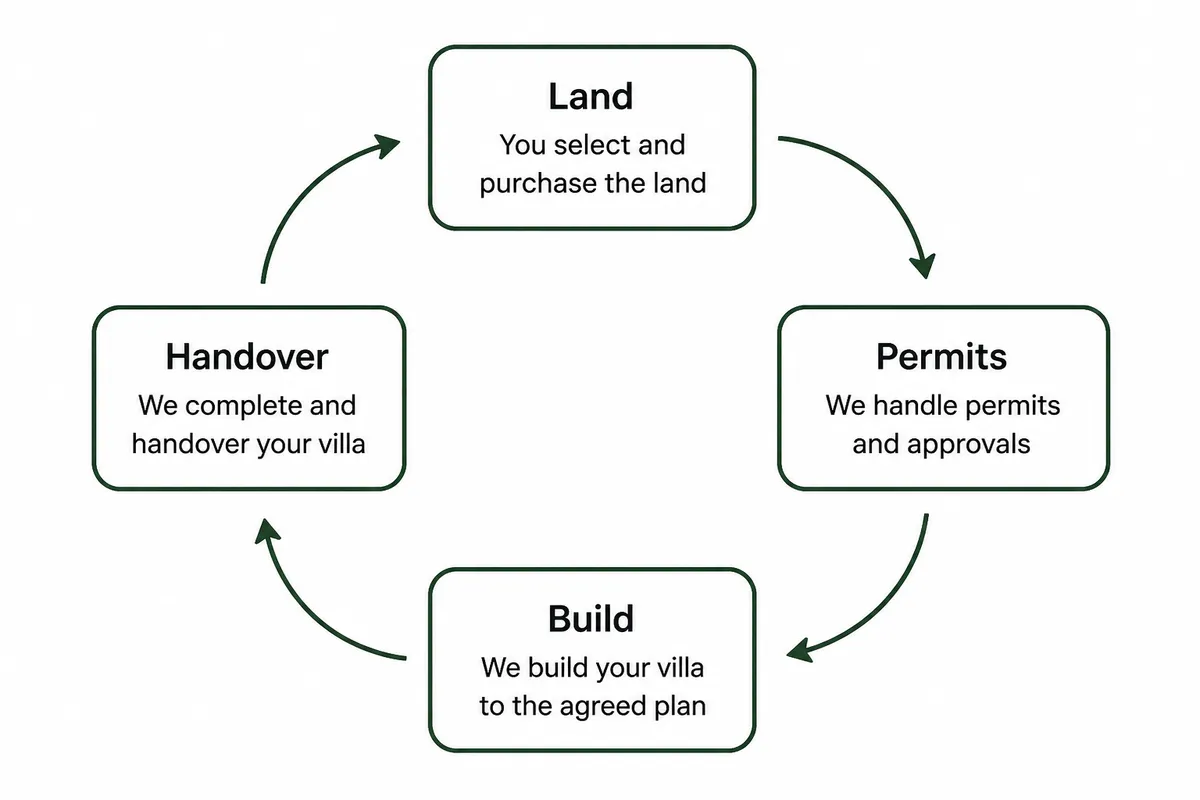
Villa construction in Bali is the end-to-end process of turning a leased plot — most often in build hotspots like Ubud — into a finished, handed-over villa. For a remote buyer the real question is not bricklaying; it is how to keep quality and money under control at every stage. This guide walks through that process the way a developer runs it, so you can verify each step from abroad.
What villa construction in Bali involves
A Bali villa is usually built off-plan: you buy from drawings or renders, and a local developer or licensed general contractor runs the full cycle from land Legal due diligenceAn independent lawyer’s check before purchase: who holds the land, its zoning and permits, and whether there are mortgages, seizures or court disputes. and permits, through structural works, to handover. For a remote foreign investor the decisive factor is controlling quality and payments at each stage, not the construction techniques themselves.
In practice, Bali villa construction splits into two layers that run in sequence. First comes the legal layer — securing the land and the permit. Then comes the physical build, from groundworks to the finished pool. A buyer sitting in another country interacts mostly with the paperwork and the reporting around those layers, which is why the contract matters as much as the concrete.
 Enlarge image
Land, lease and permits before you build
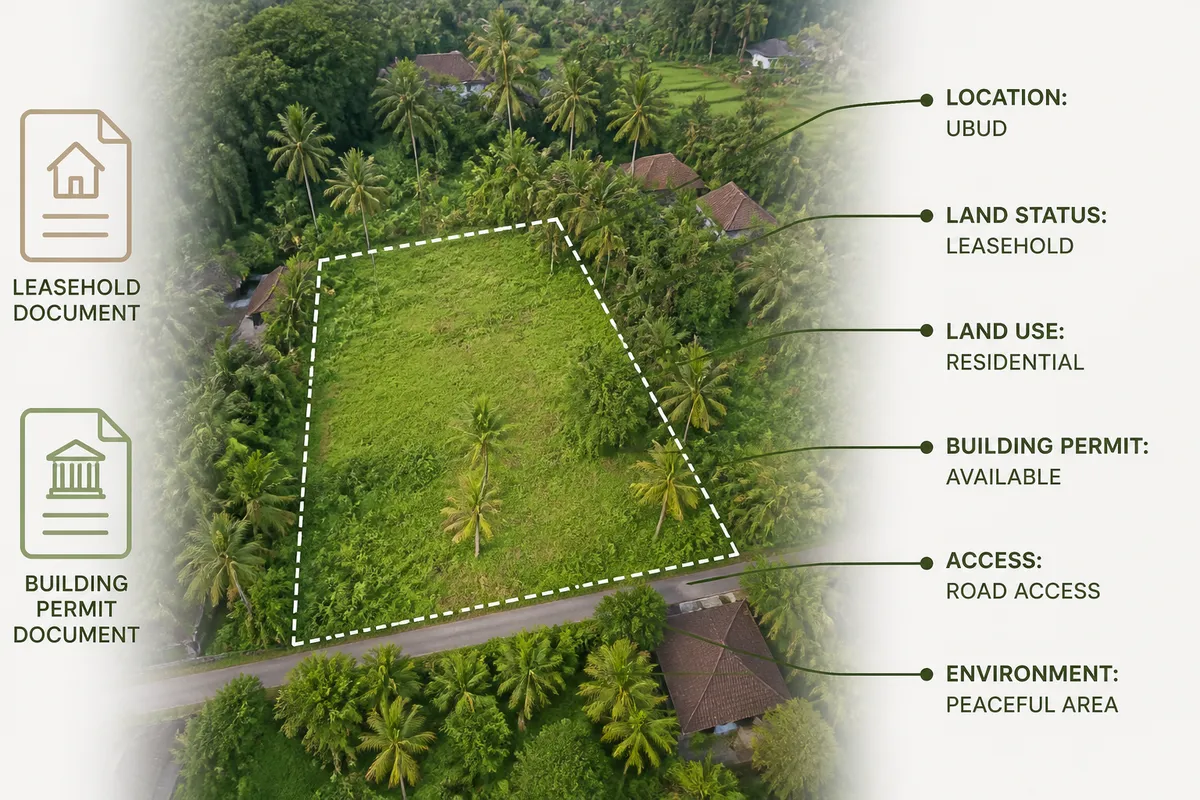
Before any groundworks, you need two things settled: a notarial Leasehold (Hak Sewa)A long-term lease of land, signed before a notary. The land itself is not bought. For CITRINE the land lease runs from 28.11.2025 to 28.11.2055, with a right to extend for 30 years at the market price of land. over the plot, zoned for your intended use, and the required Indonesian building permit. Confirm both in writing before a construction contract is signed. Skipping this layer is the single most expensive mistake a remote buyer can make, because it is almost impossible to fix after the slab is poured.
Work through a short pre-build checklist:
- Notarial leasehold. Have an independent Notary and PPATA notary (notaris) certifies agreements, including a land lease. A PPAT (Pejabat Pembuat Akta Tanah) is an official authorised to draw up deeds on land rights. In Bali one person often holds both roles. confirm the lease is registered in your name and that its term and renewal conditions are clear. You should end up holding a registered notarial lease, not a verbal promise.
- Zoning. Check the plot is zoned for villa or tourism use, not green-belt or agricultural land where building is restricted.
- Building permit. Confirm the permit for the planned villa is issued for that specific plot before works begin, and that its scope matches the design you bought.
- Due diligence. Cross-check the seller's right to lease and any existing encumbrances on the land.
Zoning and permit rules differ by regency and change over time, so treat local legal advice as part of the budget, not an optional extra.
 Enlarge image
Construction stages, step by step
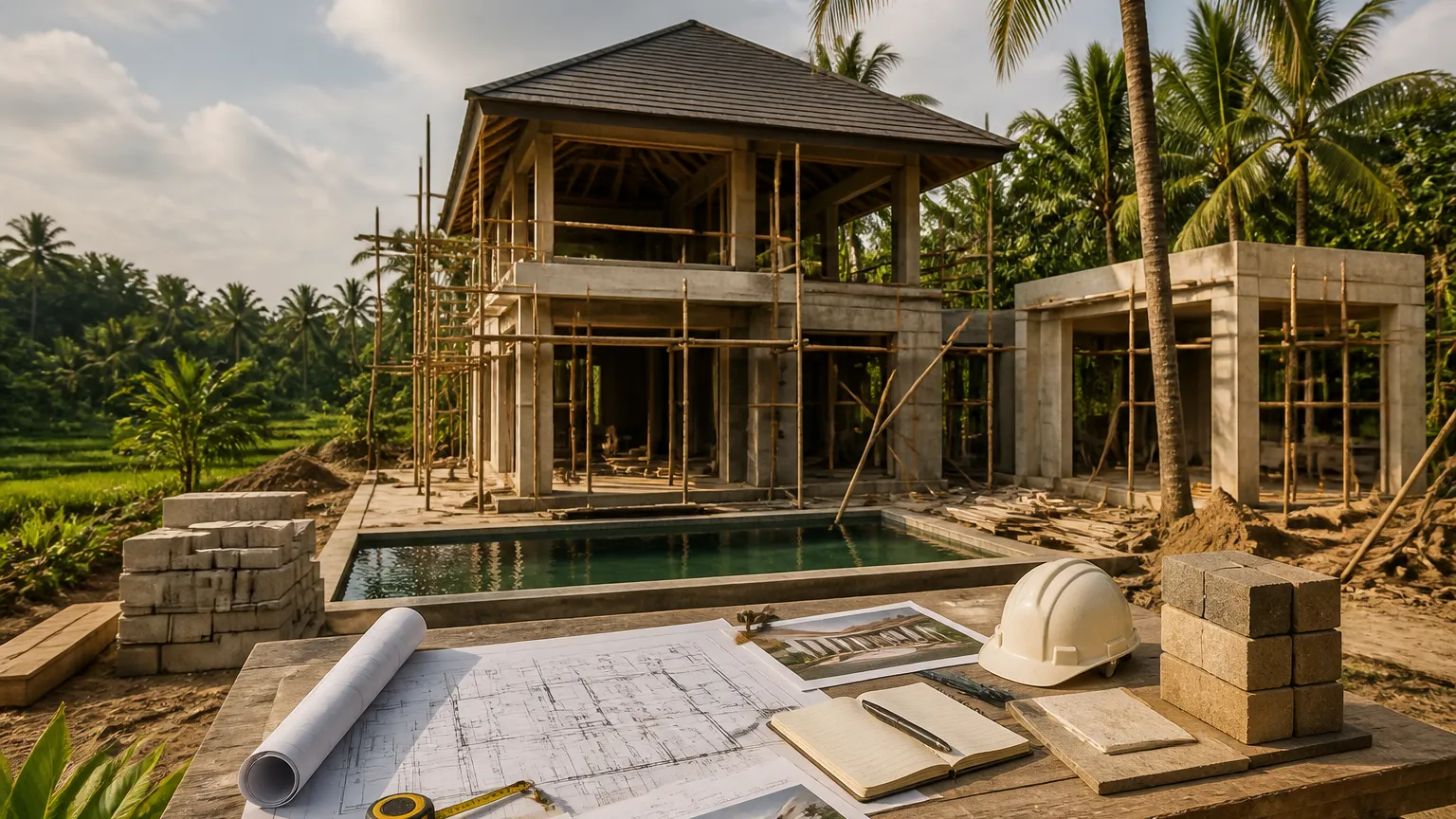
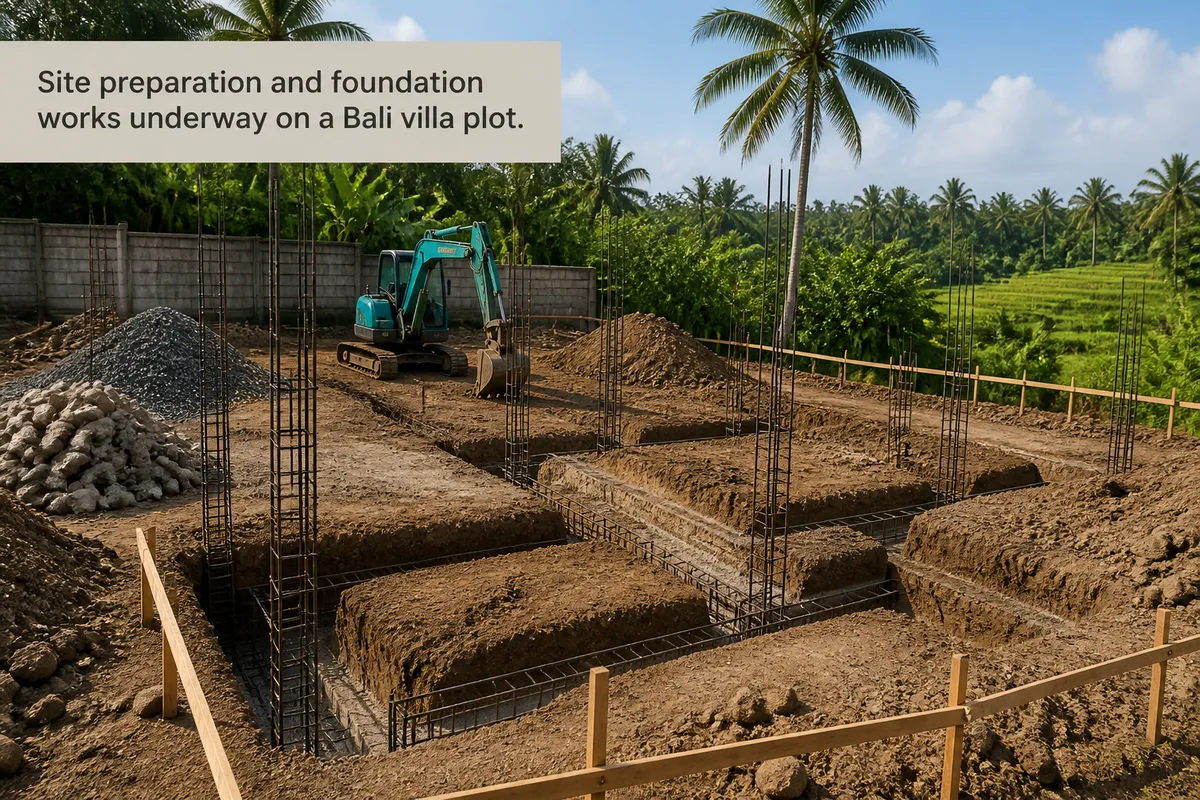
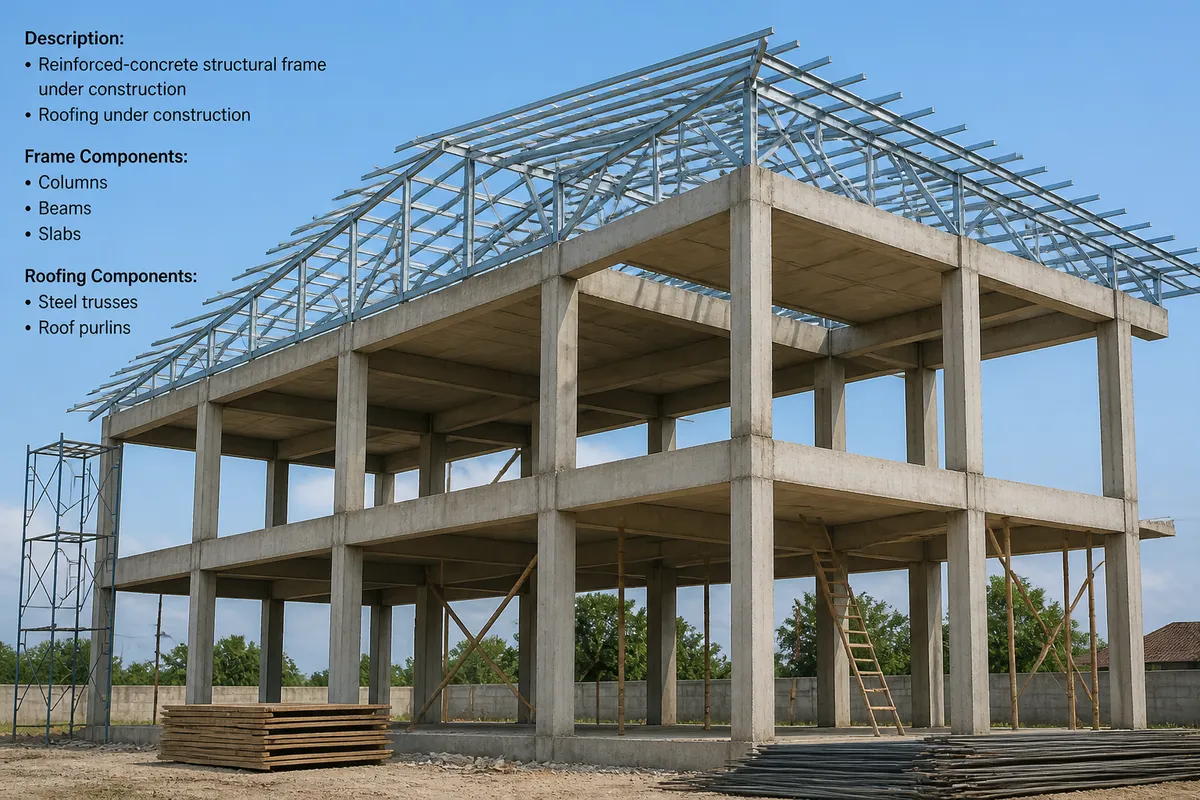
A Bali villa build typically runs through site preparation, foundation, structural frame, roofing, MEP, finishing and pool/landscaping before handover. Each stage produces something you can photograph and sign off, which is what makes remote control possible. Here is the order most Ubud projects follow:
- Site preparation — clearing, access, levelling and setting out the footprint.
- Foundation — groundworks and footings sized to the soil and slope.
- Structural frame — reinforced-concrete columns, beams and slabs.
- Roofing — roof structure and cover, so the shell is weather-tight.
- MEP — electrical, plumbing and drainage first-fix.
- Finishing — plaster, floors, joinery, bathrooms and fit-out.
- Pool and landscaping — pool shell, decking and garden.
- Handover — snagging, final checks and keys.
 Enlarge image
Tie each payment to a completed and verified stage rather than to a fixed calendar. In the contract, define what "done" means for every stage — a poured foundation, a closed roof, finished MEP — and release funds only after that stage is documented. The test is simple: no payment should run ahead of what you can see on camera.
 Enlarge image
How long it takes: realistic timelines
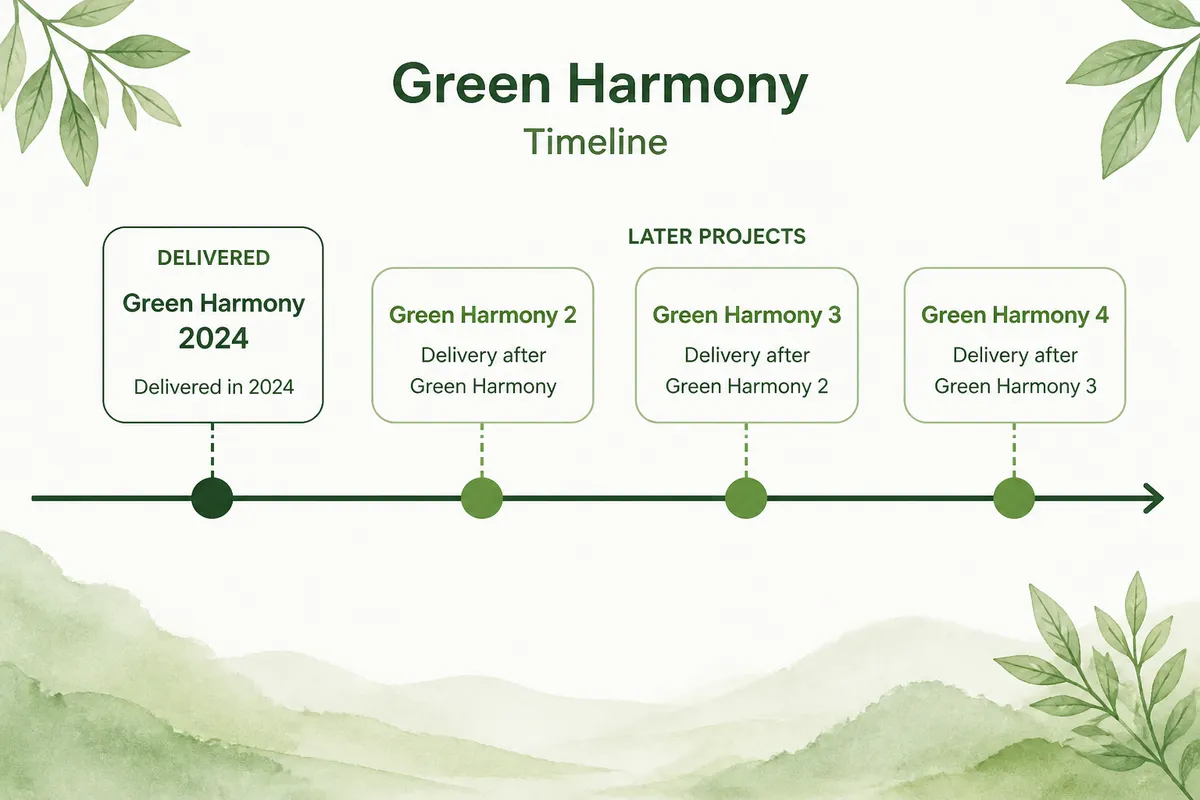
Build time depends on the plot, the design, permit processing and the rainy season, so trust a developer's own delivered timeline over any generic promise. The honest gauge is a finished project you can check. Green Harmony in Pejeng, Ubud was sold off renders in 2023 and handed over in October 2024 — a real build-to-handover timeline rather than a brochure estimate.
Ask any developer for the same: the date a delivered project was sold off-plan and the date it was actually handed over. A single verified timeline tells you more about pace and reliability than a confident number on a sales call.
 Enlarge image
Quality control, stage payments and progress reports
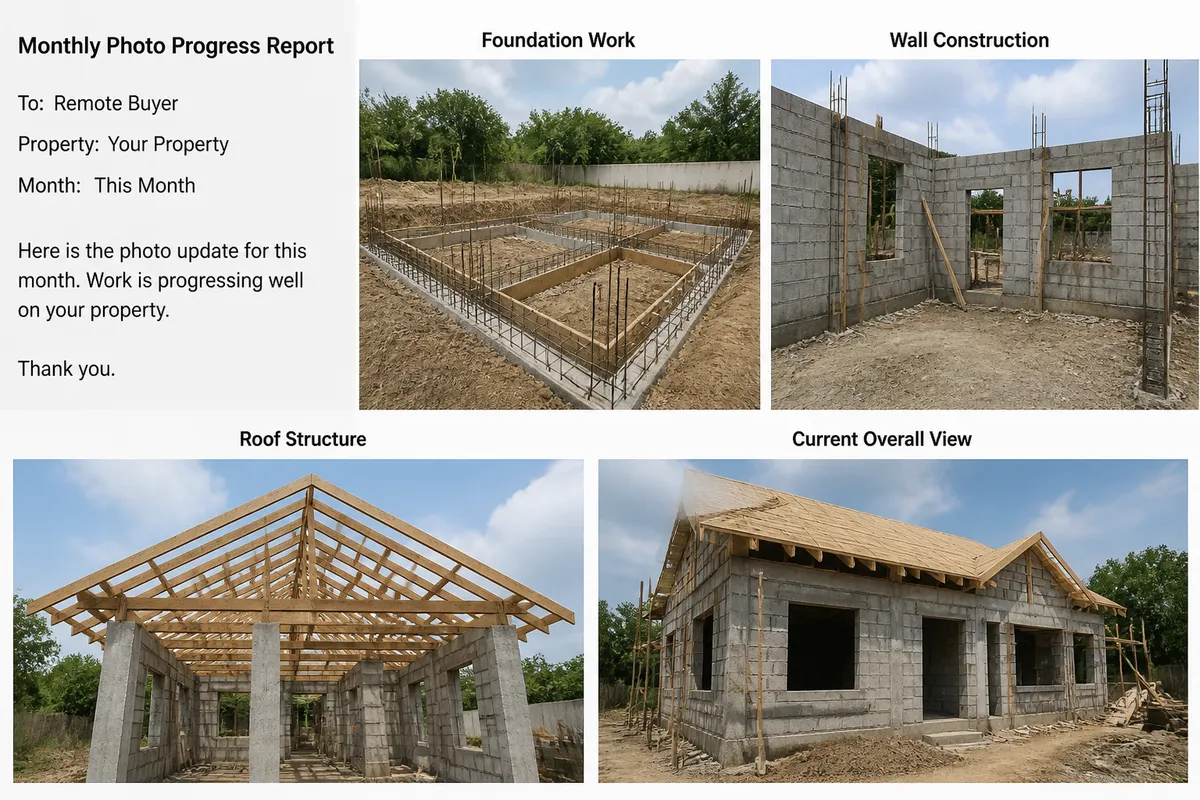
Remote control rests on three habits: pay per completed and verified stage, route money to a licensed general contractor rather than a middleman, and require monthly photo/video progress reports written into the contract. Add a reporting clause so dated media arrives every month, and you can follow the build without flying in.
Reports show progress, not hidden structural quality, so pair them with an independent inspection at the stages that get covered up — the foundation and the frame before plastering. A good rhythm is: media each month, a milestone photo set at each stage sign-off, and the option to send your own inspector before you release the next payment.
 Enlarge image
Costs to plan for (without the object price)
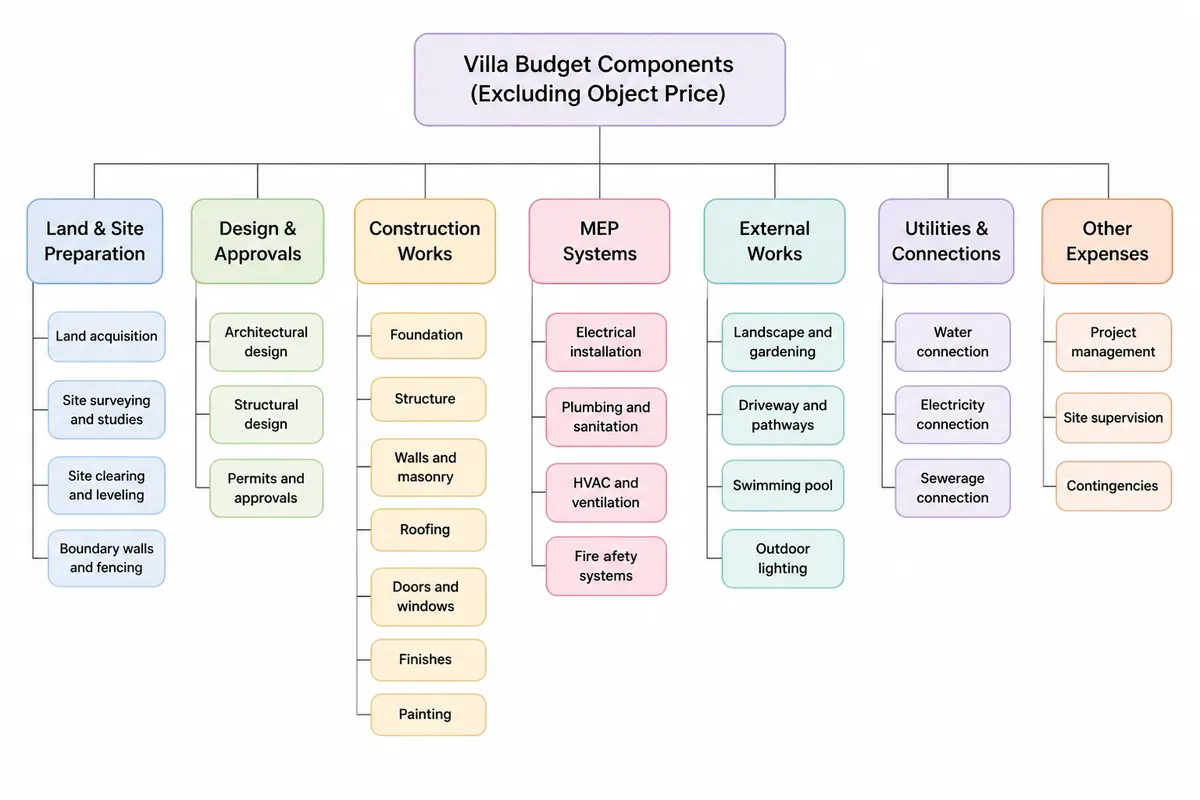
Beyond the build contract itself, plan for a legal layer before construction and a running layer after handover. The purchase figure is quoted by a manager, not published here; what follows is the structure of everything around it. Map your budget to these components:
| Cost component | What it covers |
|---|---|
| Build contract | Staged payments to the general contractor against completed stages |
| Land and legal | Notary, lease registration, building permit, due diligence |
| Management | Fee a Management companyThe company that runs a villa as a rental after handover: bookings, guests, cleaning, maintenance and the monthly owner report. It is paid a share of revenue. takes from rental revenue |
| Tourist levy | A local charge applied to paid guest stays |
| Utilities and upkeep | Power, water, pool and garden maintenance, repairs |
| Insurance | Cover for the property and its contents |
Sample calculation: assume, only as an illustration, a villa grosses $2,000 a month from short stays, a management company takes 20% of revenue, and a 10% tourist levy applies to guest payments.
- Gross per year: $2,000 × 12 = $24,000
- Management fee: $24,000 × 20% = $4,800
- Tourist levy: $24,000 × 10% = $2,400
- Net before utilities and upkeep: $24,000 − $4,800 − $2,400 = $16,800
These numbers are assumptions to show the method, not real rates — confirm the actual figures with the developer. If you keep the villa for personal use, the rental fee and levy drop out and the cost mix shifts toward upkeep alone.
 Enlarge image
How to choose a developer or contractor
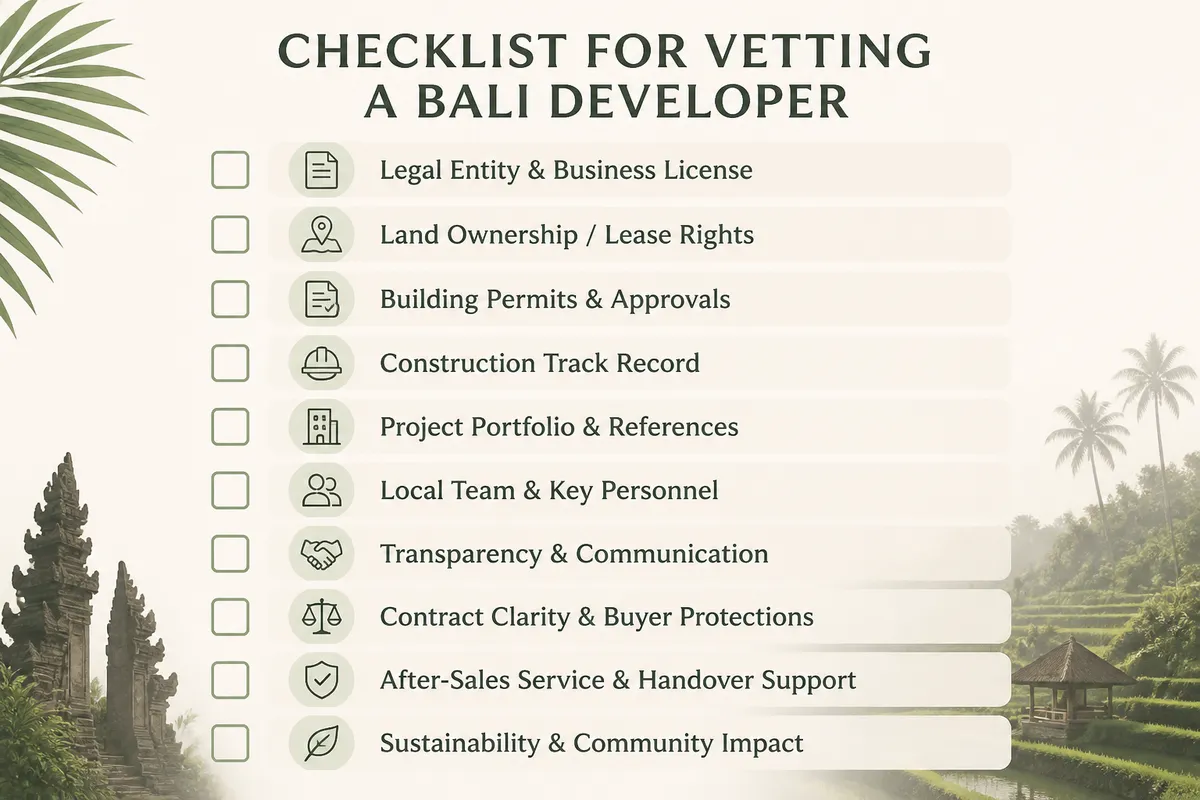
Check three things before you sign: a track record of delivered, handed-over projects — not only renders; a licensed general contractor who receives the staged payments directly; and a payment plan that never runs ahead of construction. Most remote-buyer losses trace back to one of these being skipped.
Common mistakes and how to avoid them:
- Buying on renders alone. Ask for addresses of completed villas and guest reviews of delivered projects. You want to see real OccupancyThe share of nights a villa is booked over a period. Green Harmony: 88.1% on average, January–July 2025. Past results, not a forecast., not only drawings. A short track record is not automatically bad, but it raises how much due diligence you owe yourself.
- Paying an intermediary. Confirm the general contractor is licensed and that the contract names them as the party receiving staged payments. Licensing alone does not guarantee quality, but money moving to a middleman removes your leverage.
- Large upfront lump sums. Structure payments against verified stages so no instalment exceeds documented progress. Some land and permit costs are legitimately upfront; construction costs are not.
Imagine two offers at the same price: one shows you a handed-over project with live guest reviews and a stage-linked Payment by construction stageCITRINE is paid in five instalments, 30/20/20/20/10%, each tied to a completed construction stage rather than a calendar date., the other shows only renders and asks for half the sum before groundworks. The first is checkable from abroad; the second asks for trust you cannot verify.
 Enlarge image
KAMRITA completed projects and results
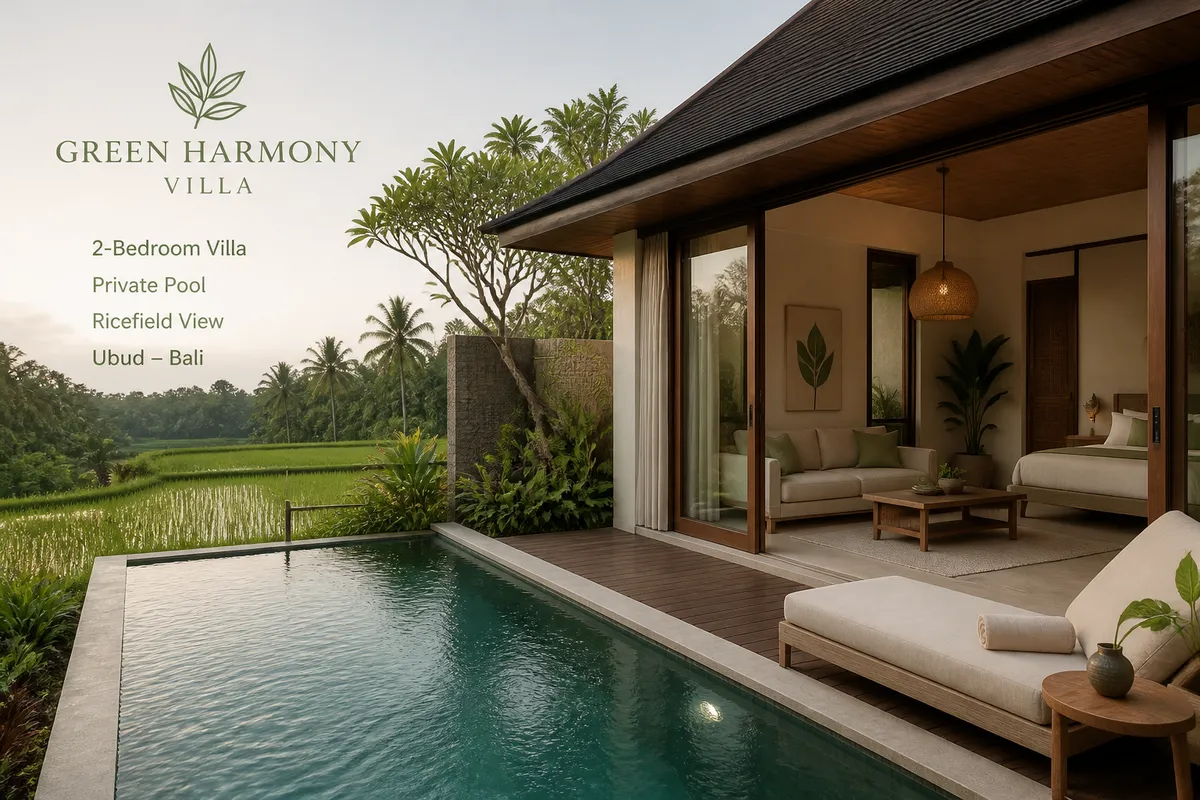
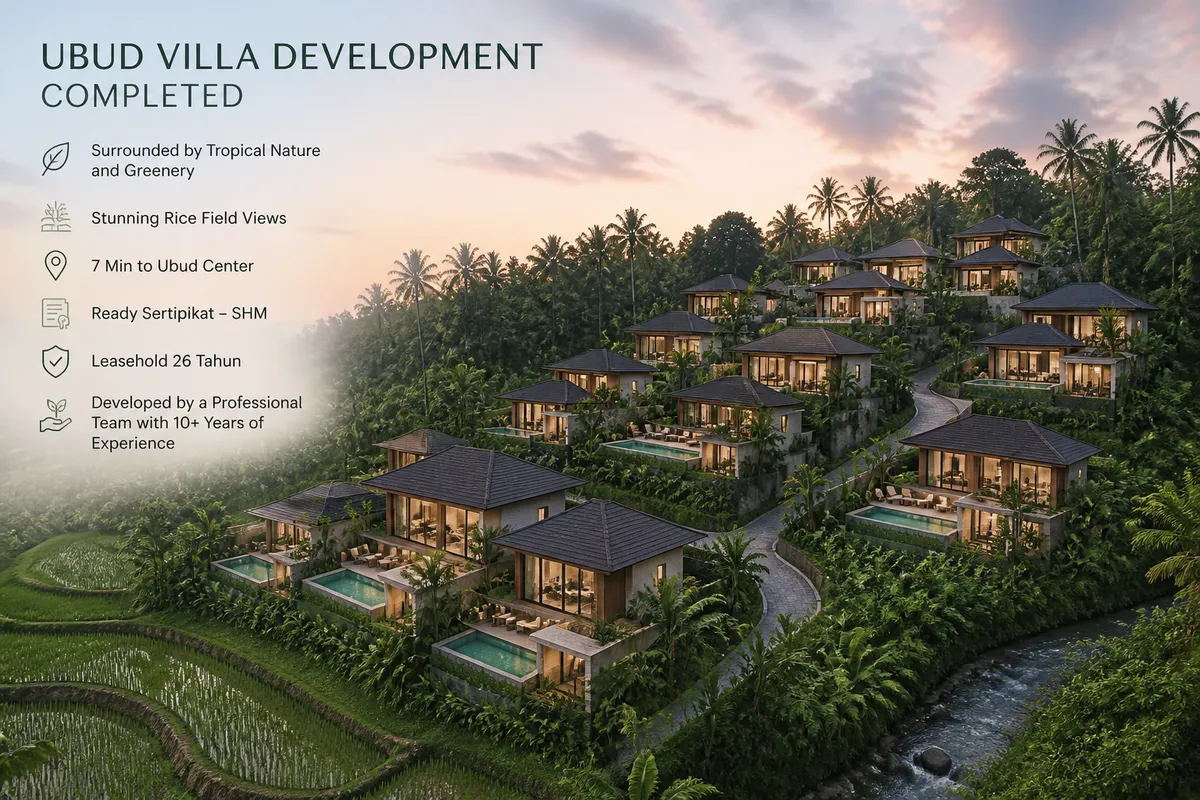
Our delivered reference is Green Harmony in Pejeng, Ubud: four one-bedroom villas, each with a home office — an 84 m² house on a 150 m² plot — sold off renders in 2023 and handed over in October 2024, all four sold. It is the kind of finished, occupied project a remote buyer can check rather than take on faith.
On Booking.com the project holds a 9.0 "Superb" rating across 12 reviews as of October 2026. Two guests left perfect 10/10 scores — one praising the ricefield view, cleanliness and privacy, the other singling out the pool. Guest ratings on a delivered build say more than renders: they come from people who have actually stayed in the villa.
 Enlarge image
 Enlarge image
FAQ
How long does it take to build a villa in Bali? It depends on plot, design, permits and the rainy season, so judge by a developer's delivered timeline, not a generic figure. Green Harmony was sold off renders in 2023 and handed over in October 2024. Ask any developer for the same pair of dates on a finished project.
How are construction payments structured? The safest structure ties each payment to a completed and verified stage, with funds going to a licensed general contractor. Define in the contract what "done" means for each stage, and release money only after it is documented. No instalment should run ahead of visible progress.
Can I control the build remotely? Yes — require monthly photo/video progress reports written into the contract, and add an independent inspection at the foundation and frame stages. Reports show progress but not hidden structural quality, so pair media with a physical check before covered-up work is paid for.
What permits are needed before building? You need a notarial leasehold over a correctly zoned plot and the required Indonesian building permit, both confirmed before groundworks. Have an independent notary verify the lease and zoning, and check the permit is issued for your specific plot and design. Rules vary by regency, so confirm them locally.
What ongoing costs follow handover? Plan for a management fee taken from rental revenue, a tourist levy on paid guest stays, utilities and upkeep, and insurance. If you use the villa yourself, the rental-related charges fall away. Confirm the actual rates with the developer rather than relying on sample figures.
Thinking about a build in Ubud? You can bring your plot, design or shortlist to our sales team and get a straight answer on stages, timeline and what to budget — a manager replies within 15 minutes on WhatsApp and Telegram during Bali hours, GMT+8.
Next step
We build villas in Ubud and write about what we check on our own projects: land, permits, construction and the numbers of completed villas. About the team