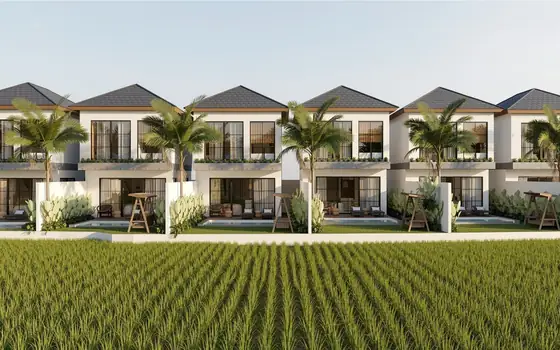
Bali Property Market 2026: Foreign Investor Guide
Bali property market in 2026 for foreign investors: current trends, rental yields, legal leasehold ownership, where to buy and the key risks before you buy.
 KAMRITA team10 min read ·
 Enlarge image
Contents12 sections
- What the Bali Property Market Looks Like in 2026
- Bali Property Market: H1 2026 Snapshot
- From Gold Rush to Correction: How the Market Evolved
- Oversupply and the Construction Slowdown: What It Means for Buyers
- Is It Too Late to Invest in Bali in 2026?
- Where to Buy: Bali's Key Investment Zones
- What Type of Property Should You Buy?
- Can Foreigners Legally Own Property in Bali? Leasehold Explained
- Rental Yields and Ongoing Costs: A Realistic View
- Key Risks and Common Pitfalls
- Frequently Asked Questions
- Where This Leaves You
Bali is still one of the most watched property markets for foreign buyers, but 2026 rewards care over speed.
What the Bali Property Market Looks Like in 2026
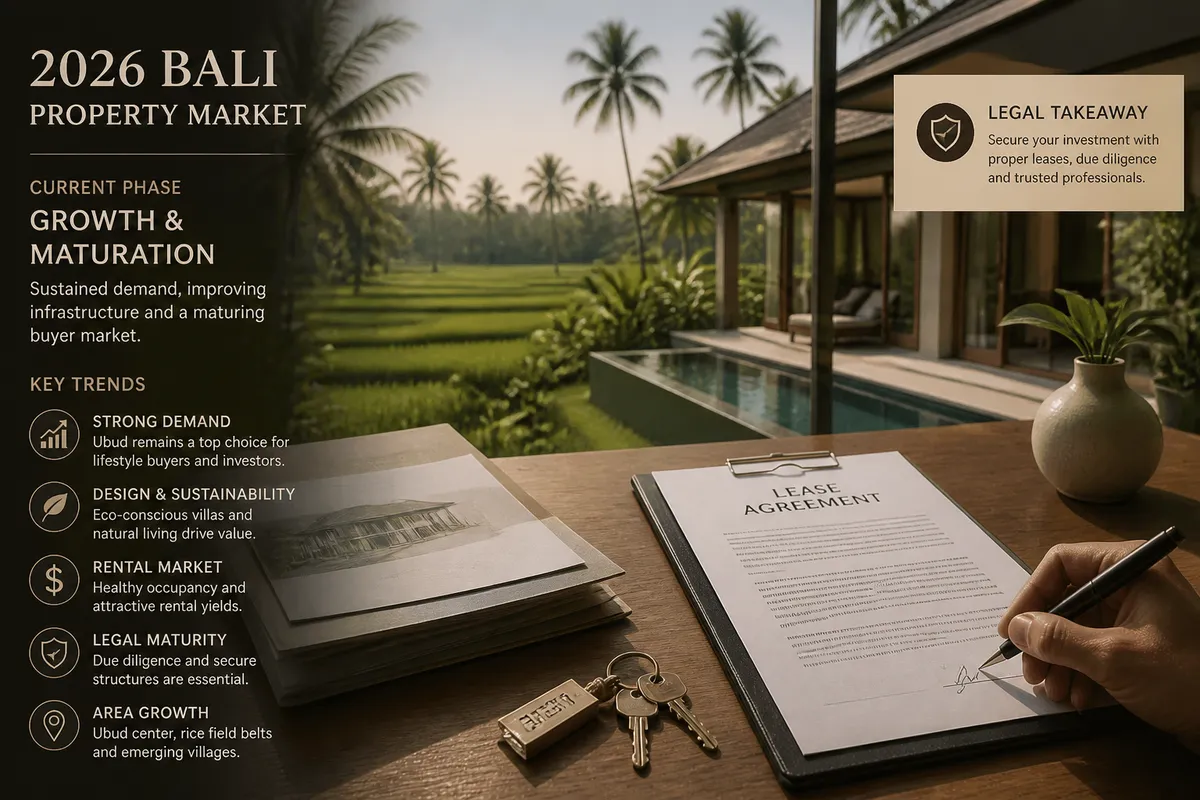
The Bali property market is the market for villas and land on the island, bought largely by foreign investors who mostly hold property through Leasehold (Hak Sewa)A long-term lease of land, signed before a notary. The land itself is not bought. For CITRINE the land lease runs from 28.11.2025 to 28.11.2055, with a right to extend for 30 years at the market price of land. rather than direct Freehold (Hak Milik)Full ownership of land. Under Indonesian law it is available only to Indonesian citizens, so foreign buyers in Bali work with leasehold. — a contract-based right to use, not ownership of the land, according to Expatica, August 2026. In 2026 it reads as a maturing, more selective market.
In our view, the easy years — when almost any well-marketed off-plan villa found a buyer — have given way to a phase where location, legal clarity and a builder's delivery record carry more weight than momentum. For a foreign buyer with a budget in the usual range, that is a healthier backdrop: there is more choice, more time to do Legal due diligenceAn independent lawyer’s check before purchase: who holds the land, its zoning and permits, and whether there are mortgages, seizures or court disputes., and less pressure to commit on a rendering alone. The task shifts from "catching the wave" to picking a specific villa that will actually rent and that you can resell.
 Enlarge image
Bali Property Market: H1 2026 Snapshot
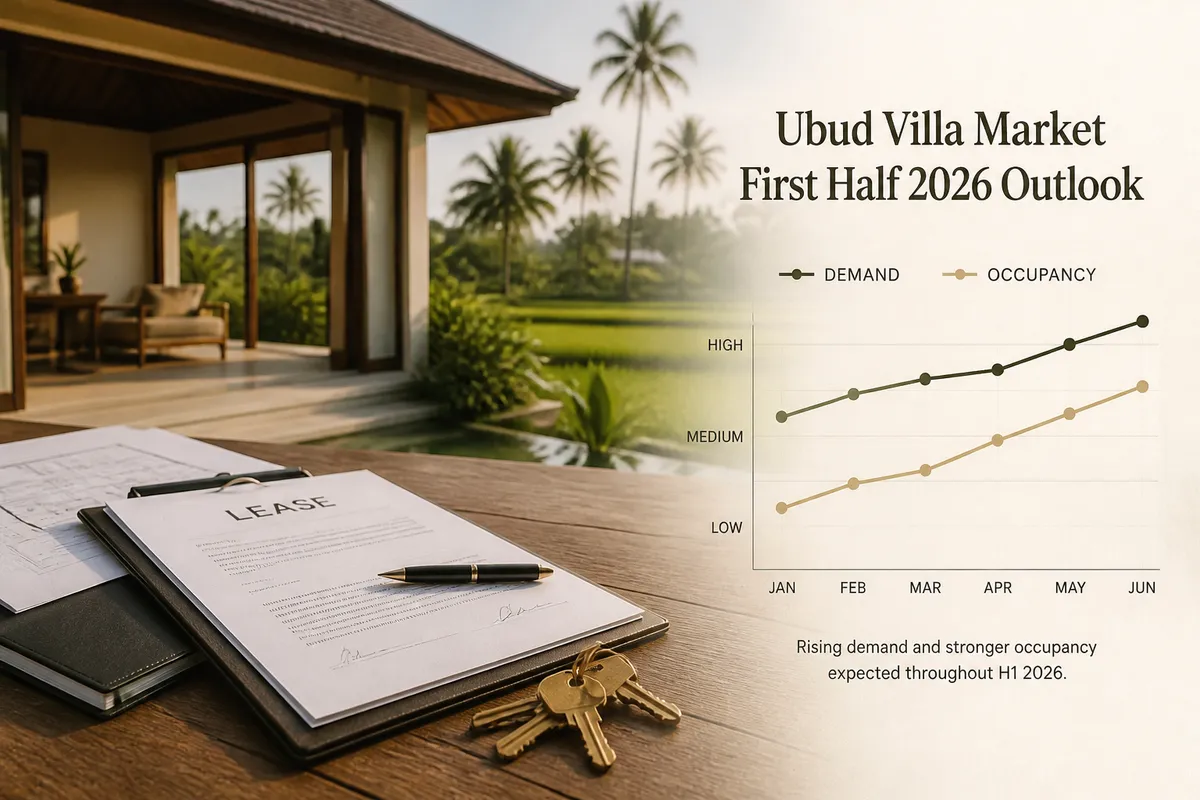
For the first half of 2026, treat this section as a checklist to run on any area before you buy, rather than a set of fixed figures. Work through three questions for each shortlisted zone and compare the answers side by side:
- Rental OccupancyThe share of nights a villa is booked over a period. Green Harmony: 88.1% on average, January–July 2025. Past results, not a forecast. — does demand hold up year-round, or does it drop off outside the peak season?
- Delivery track record — which projects in the zone are genuinely completing on schedule, not just launching?
- New supply — how quickly is new inventory arriving, and is the area already saturated?
The zone that answers all three well is a safer bet than one riding on hype.
Rather than tracking a single headline number, look at a few concrete things before you shortlist. Check whether a target area already has many comparable villas standing empty. Ask whether off-plan villa projects nearby are handing over when promised. Compare advertised rents with what similar villas actually book. These are the readings that tell you how firm an area really is, and they are easy to gather remotely with the right agent or developer.
 Enlarge image
From Gold Rush to Correction: How the Market Evolved
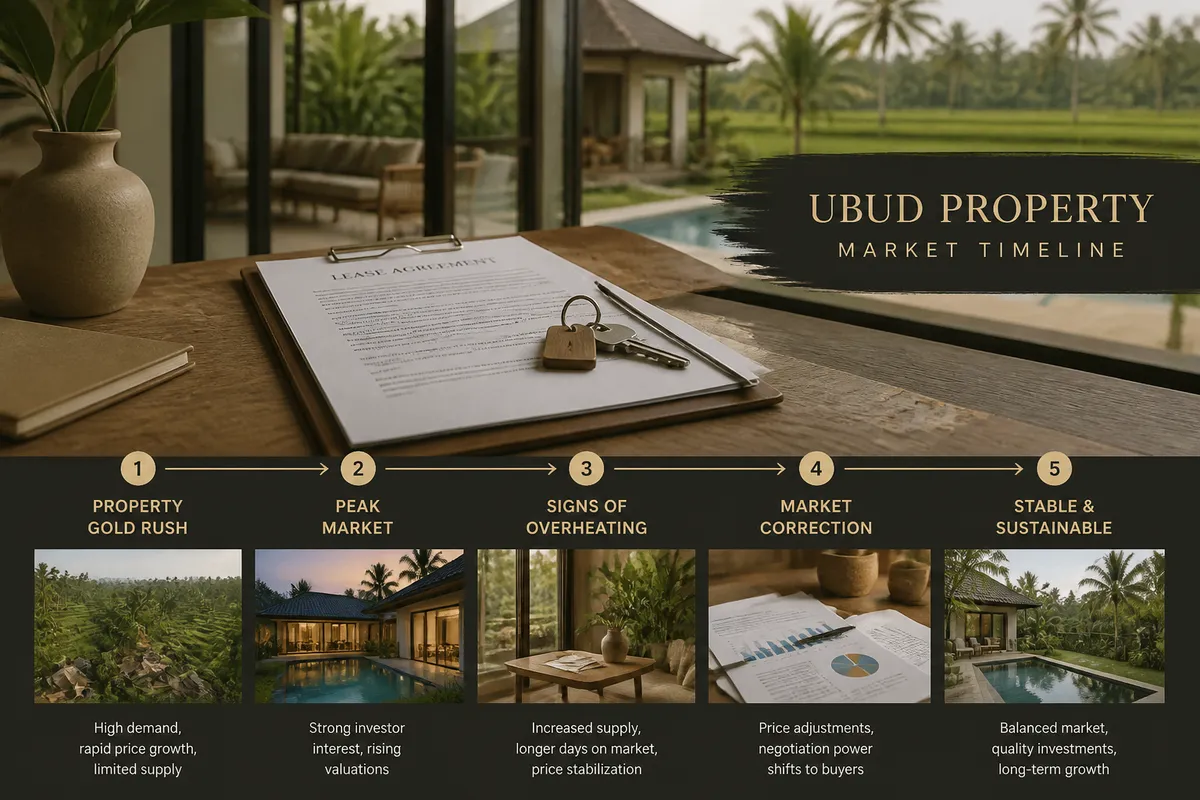
Property markets move in cycles, and Bali has followed a familiar arc: a rush of interest pulls in capital and construction, supply catches up with demand, and rapid growth then cools into a more sober, selective phase. Understanding that arc explains why 2026 feels calmer than the boom years and why the old "buy anything" logic no longer holds.
- Early interest — a few areas attract pioneers and strong word of mouth.
- Rapid growth — prices and new launches accelerate as capital floods in.
- Peak building — construction runs ahead of real demand in the hottest spots.
- Cooling and selectivity — growth thins, buyers become choosier, and quality separates from hype.
For an investor, the lesson is not to time the cycle perfectly but to buy in a way that survives the quieter parts of it: proven demand, a sound legal structure and a villa that stands out on its own merits.
 Enlarge image
Oversupply and the Construction Slowdown: What It Means for Buyers
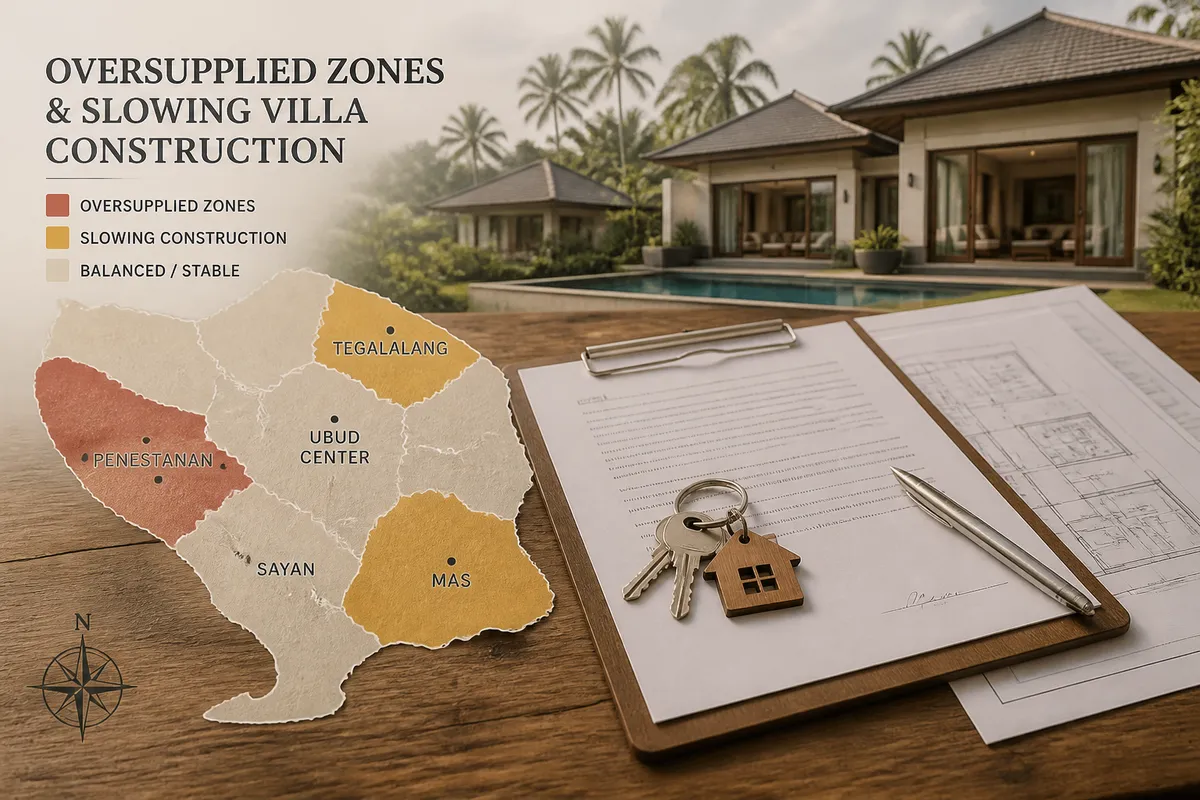
Oversupply is when more similar villas reach a market than renters and buyers can absorb, which puts downward pressure on both rents and price growth. When margins thin that way, developers tend to launch fewer new projects, so building activity slows. For a buyer, this is a reason to favour finished product and established locations over speculation.
The forces that typically drive this phase are worth watching in any area you consider:
- Too many lookalike villas in one hot zone competing for the same guests.
- Rising build and land costs, which squeeze developer returns.
- Softer price growth, which makes quick capital appreciation less reliable.
- Longer sell-through and rent-up times for generic product.
None of this makes Bali a poor market; it makes it a market where the specific villa and the specific zone matter far more than the island's overall story. Treat broad forecasts as context, and judge each deal on its own occupancy and legal fundamentals.
 Enlarge image
Is It Too Late to Invest in Bali in 2026?
It depends on your goal. For rental income or personal use, 2026 is not too late, but it is more selective than the boom years. Decide to invest only after matching the purchase to a clear goal — rental income or personal use — because that goal sets the right zone, villa type and risk level. Name the goal first, then shortlist zones and villa types that fit it; you are ready to view when you can state your expected use, target zone and villa type in a sentence. This logic applies once you have a confirmed budget to work with.
A simple way to decide:
- Goal: steady rental income → prioritise a proven zone with year-round occupancy and a completed or near-complete build.
- Goal: personal use plus occasional rental → weigh lifestyle fit and access alongside occupancy, and accept a slightly lower yield for comfort.
- Goal: capital appreciation → be most cautious in oversupplied areas, where price growth has thinned.
Suppose you have a mid-range budget and want rental income plus a few weeks a year for yourself. A one- or two-bedroom villa in an established, well-connected area usually fits better than a larger off-plan villa in a saturated zone, because it is easier to keep occupied and simpler to resell later.
 Enlarge image
Where to Buy: Bali's Key Investment Zones
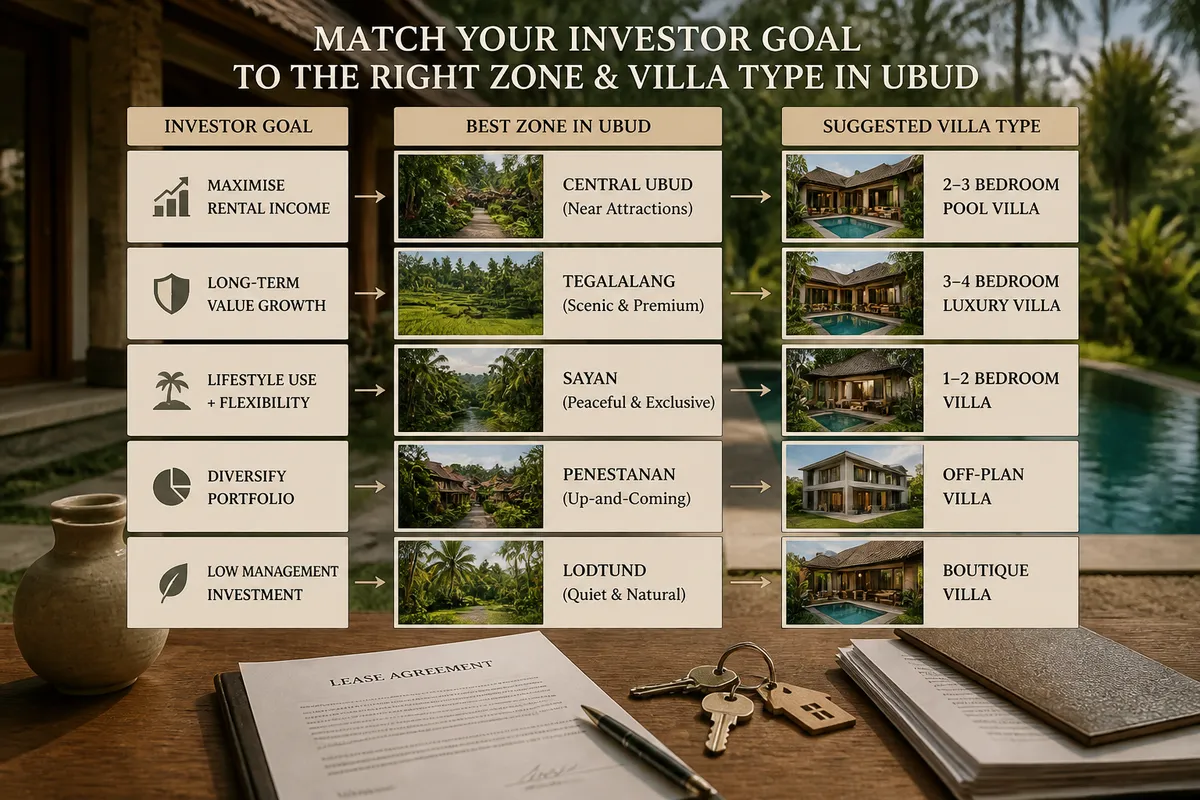
Start from your goal — income or lifestyle — because it drives every other choice. Then work in order:
- Shortlist zones by real rental demand, infrastructure and your purpose rather than by hype.
- Compare the candidates on their occupancy track record and access to amenities; the right one shows steady year-round demand and infrastructure that fits your guests.
- Match the villa type to that zone and goal — a layout and bedroom count that suit your target guests or your own use.
Keep in mind that prime-zone premiums can lower your Net yieldIncome for a year after the management fee and operating costs, divided by the purchase price. Green Harmony: 14.1–17.8% by villa, 15.3% on average, January–July 2025 annualised on the $95,000 purchase price. Past results, not a forecast. even when occupancy is strong, so weigh the entry cost against expected demand before you commit.
A rough comparison of the main options:
- Ubud and its surroundings — nature, wellness and rice-field settings; tends to attract longer, quieter stays and buyers who also value living there.
- Canggu and the busy coastal belt — surf, cafes and nightlife; high footfall but stronger competition and more oversupply pressure.
- Quieter emerging areas — lower entry and possible upside, but thinner demand and less infrastructure, so verify everything before committing.
The one rule across all of them: match the investment zone to your target guest profile and check real occupancy numbers, not the marketing deck.
 Enlarge image
What Type of Property Should You Buy?
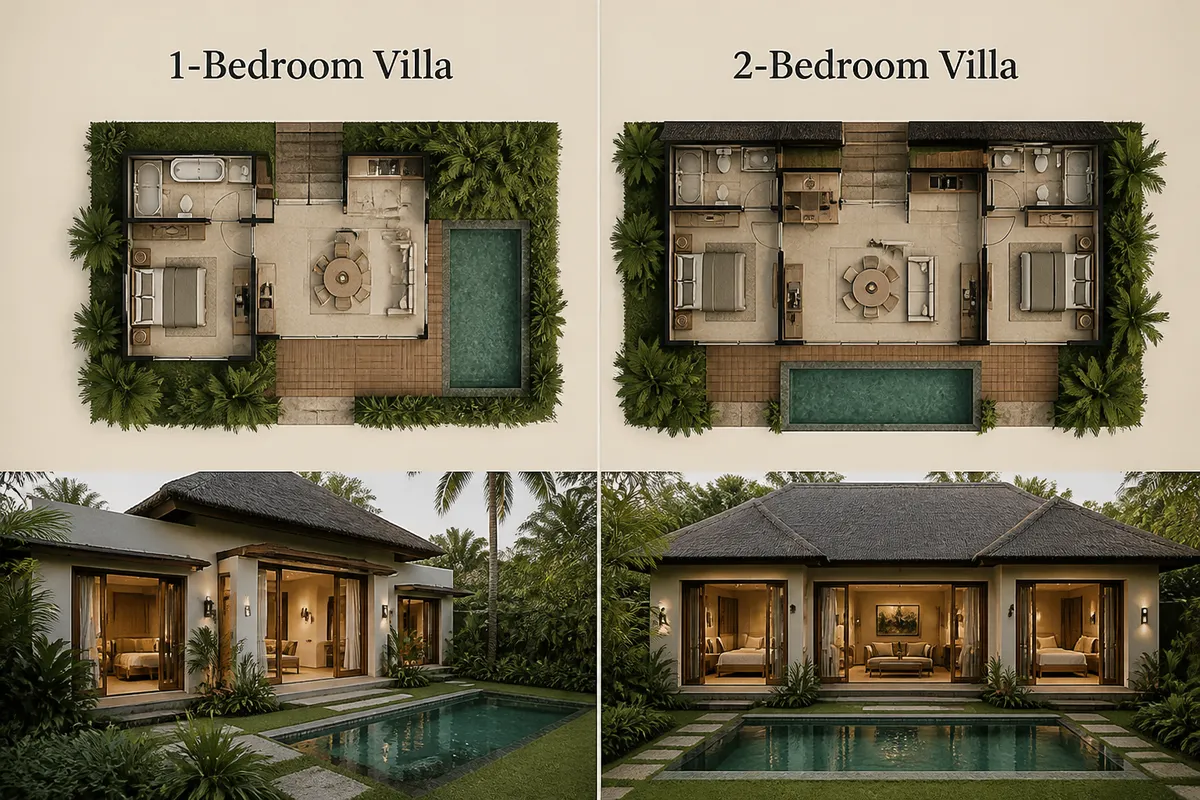
Pick the villa type — 1BR versus 2BR, rental versus living — by who will actually use it and the local rental pattern. Match the bedroom count and layout to your main rental segment or your own needs; the layout is right when it fits the guests you expect to book. Watch that an over-sized villa raises cost without a matching rise in yield.
How the main options differ:
- 1BR villa — lower cost and strong short-term rental demand from couples; usually the easiest to keep occupied.
- 2BR villa — higher cost but broader appeal for families and groups and longer stays; more exposure if demand softens.
- Rental-first villa — location, layout and management set up for occupancy, not for your personal taste.
- Villa to live in — comfort, privacy and neighbourhood come first, with rental as a secondary benefit.
If you want both income and personal use, lean toward a layout that your core guests want but that you would also enjoy for a few weeks a year.
 Enlarge image
Can Foreigners Legally Own Property in Bali? Leasehold Explained
Leasehold (Hak Sewa) is the default route for most foreigners buying a villa in Bali, according to Emerhub, January 2026. It is a contract-based right to use the property for a set term rather than ownership of the land, while Hak Pakai gives a foreigner a registered right to use certain residential property, according to Expatica, August 2026.
Before any payment, confirm the leasehold term, the extension terms and a notarised land certificate. In practice, have a Notary and PPATA notary (notaris) certifies agreements, including a land lease. A PPAT (Pejabat Pembuat Akta Tanah) is an official authorised to draw up deeds on land rights. In Bali one person often holds both roles. verify the land title and read the lease clauses with you, so the lease length, the right to extend and the certificate are all documented in writing.
 Enlarge image
Rental Yields and Ongoing Costs: A Realistic View
A realistic rental yield is what remains after recurring costs, not the gross figure in an ad, so judge income on evidence and net of expenses. Short-term rental revenue depends on occupancy, season and management quality, and several ongoing costs sit between gross rent and what reaches you.
| Ongoing cost | What it covers | Note |
|---|---|---|
| Property management | Guest handling, bookings, marketing, upkeep coordination | Rate set per project and confirmed by a manager |
| Guest / tourist tax | Local levies on short-term stays | Charged on stays, not part of the purchase price |
| Utilities | Electricity, water, internet | Varies with occupancy |
| Maintenance & repairs | Pool, garden, wear and tear in a tropical climate | Ongoing; higher for older builds |
| Insurance | Property and liability cover | Optional but advisable |
| Cleaning & turnover | Between-guest cleaning and linen | Scales with booking volume |
Judge a developer on delivered results, not projections. In our own completed project, Green Harmony, guest feedback has been strong: one guest left a 10/10 review on Booking.com in September 2026, singling out the pool; another gave 10/10 in March 2026 for the rice-field view, cleanliness and privacy. That kind of real guest satisfaction is a better signal of achievable rental occupancy than any headline yield.
Here is an illustrative, hypothetical example — your real figures come from the specific project and management contract. Suppose a villa earns $2,000 in gross rental revenue in a month. If management and a local guest levy together take, say, 25% of revenue, and utilities and upkeep add $150, the owner nets about $2,000 − $500 − $150 = $1,350 that month. Treat every input here as an assumption: this does not substitute for the actual rates and occupancy of a real villa.
 Enlarge image
Key Risks and Common Pitfalls
The main pitfalls are buying in an oversupplied zone, dealing with an unverified developer and relying on an unclear land title. Each has a check that neutralises it before you pay. The underlying risk is simple: a villa can look fine on paper and still underperform or carry a title problem.
Pitfalls and the checks that prevent them:
- Oversupplied zone → count how many similar villas are listed nearby and ask for their real occupancy.
- Unverified developer → review delivered projects, read guest reviews, and confirm a track record of completed handovers.
- Advertised-yield trap → treat glossy yield numbers as marketing until proven.
On that last point: check real occupancy history and completed-project evidence instead of trusting advertised yields. Ask the seller for actual booking records and reviews, and visit or study finished projects rather than renders; you have done enough when you can see real bookings, not just projections. One limit to remember — past occupancy is a strong signal but not a guarantee of future demand, so pair it with a sober view of supply in the area.
 Enlarge image
Frequently Asked Questions
Can foreign buyers legally own property in Bali? Yes — foreigners use long-term leasehold rather than direct freehold, according to Emerhub, January 2026. Leasehold is a contract-based right to use the property for a set term. Before paying, have a notary verify the land certificate and the lease terms, including the right to extend.
How much does it cost to buy property in Bali? The purchase price depends on the project and zone and is confirmed by a manager for each specific villa. Beyond the price itself, budget for recurring costs such as property management, local guest taxes, utilities and maintenance. Build these into your plan before you decide, because they shape your real net yield.
What type of property should you buy? Let your purpose decide: a rental villa in a proven zone if you want income, or a villa to live in if you want lifestyle. Once the goal is set, match the layout to it — the guests you want to attract, or your own day-to-day use.
What's the biggest risk when buying a villa off-plan in Bali? Delivery risk — a project that slips its schedule or never completes. You can reduce it: choose a developer with a verified track record of finished projects, confirm the lease terms with a notary before you pay, and favour completed or near-complete builds over early-stage renders. If a deal only works when everything goes perfectly, treat that as a warning sign.
Where This Leaves You
The 2026 market rewards buyers who start from a clear goal, confirm the legal structure with a notary, and judge developers on delivered projects rather than promises. As a developer that builds and manages villas in Ubud and keeps investors updated through construction, Kamrita can walk you through the options and confirm the specifics for your case — whenever you are ready, reach out for a project-by-project picture rather than a generic pitch.
We build villas in Ubud and write about what we check on our own projects: land, permits, construction and the numbers of completed villas. About the team