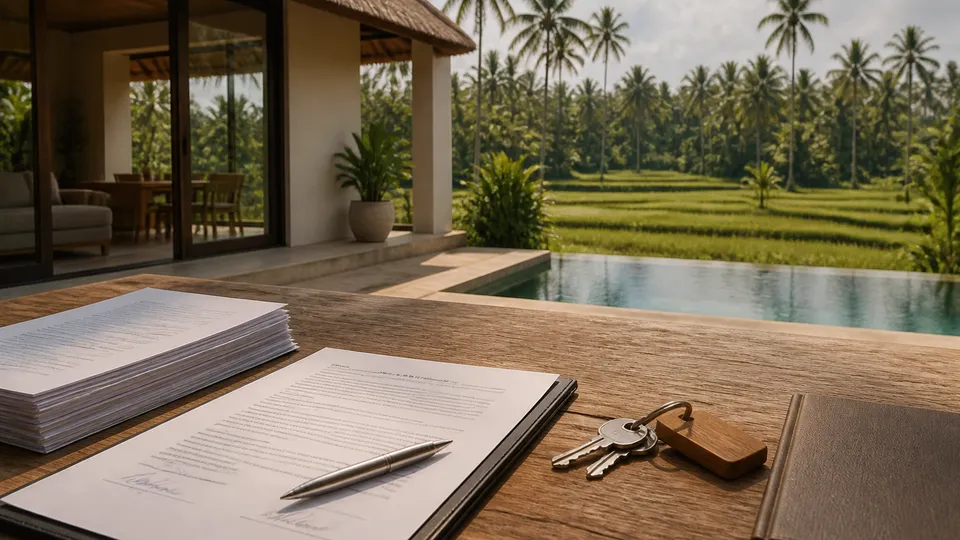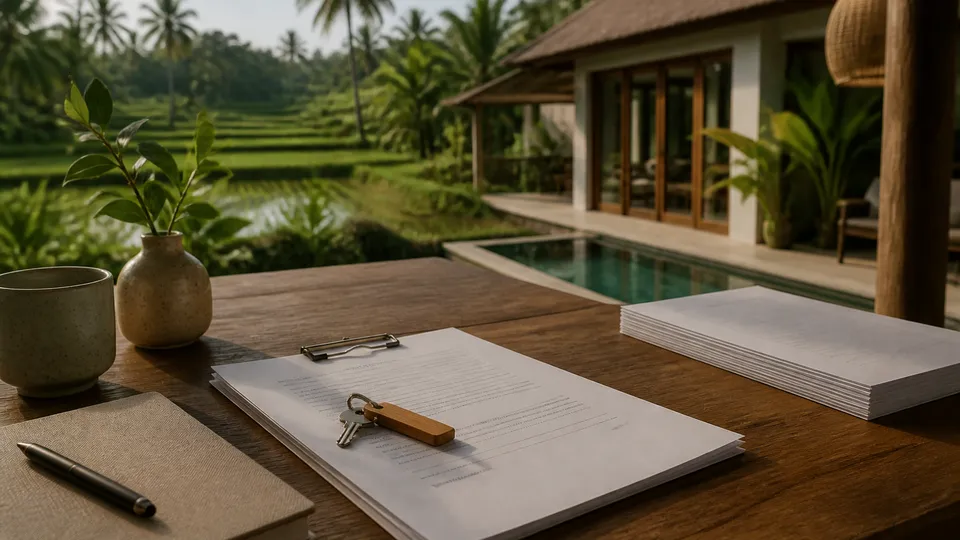
How to Buy a Villa in Ubud, Bali as a Foreigner
Thinking of buying an Ubud villa in Bali? A foreigner's guide to leasehold, buying steps, costs, taxes and rental income — from a Bali developer.
 KAMRITA team12 min read · · Updated
 Enlarge image
Contents11 sections
- What an Ubud Villa Is and Why Buy One Here
- Can a Foreigner Own a Villa in Ubud? Leasehold Explained
- How to Buy an Off-Plan Villa in Ubud: Step by Step
- Choosing the Right Villa: Location, Pool, Size and Layout
- Costs Beyond the Purchase: Taxes and Fees
- Rental Income and Property Management
- Buying Remotely and Safely: Stage Payments and Reports
- Our Track Record: Delivered Projects and Guest Reviews
- Frequently Asked Questions
- In Short: Your Next Step
- Next step
Updated 2 November 2026
Buying an Ubud villa in Bali as a foreigner comes down to three things: you hold the property on a long-term Leasehold (Hak Sewa)A long-term lease of land, signed before a notary. The land itself is not bought. For CITRINE the land lease runs from 28.11.2025 to 28.11.2055, with a right to extend for 30 years at the market price of land. rather than Freehold (Hak Milik)Full ownership of land. Under Indonesian law it is available only to Indonesian citizens, so foreign buyers in Bali work with leasehold., you usually buy off-plan and pay in stages tied to construction, and you can do the whole deal remotely when the paperwork and reporting are solid. This guide walks through ownership, the buying steps, the real ongoing costs, how renting out works, and how to check that a developer actually delivers.
What an Ubud Villa Is and Why Buy One Here
An Ubud villa is a private, standalone home — usually with a private pool and rice-field or jungle views — in and around Ubud, Bali's cultural and wellness hub. It is a self-contained property with its own garden and gate, not a hotel room, which is what draws buyers who want both income and a place of their own to visit.
Ubud sits inland in the Gianyar regency, away from the beach crowds, surrounded by rice terraces, river valleys and tropical jungle. That setting is the whole point. A villa in Ubud, Bali is bought for the quiet, the greenery and the wellness-and-culture pull of the town, not for nightlife. A private pool villa in Ubud gives couples the seclusion they book for, and the extra bedrooms and enclosed layout make these homes work for families who want space and safety in one place.
 Enlarge image
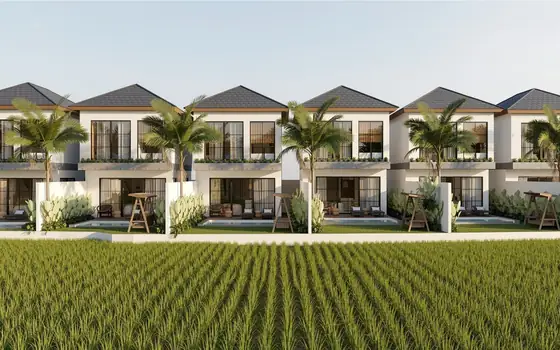
For a foreign buyer comparing areas across Bali, Ubud reads as the calmer, greener option — a villa resort feel within a working Balinese landscape rather than a beach strip. Sub-areas such as Pejeng, Lodtunduh and the villages around central Ubud each have their own mix of rice-field views, access and build density, which matters once you move from browsing to choosing.
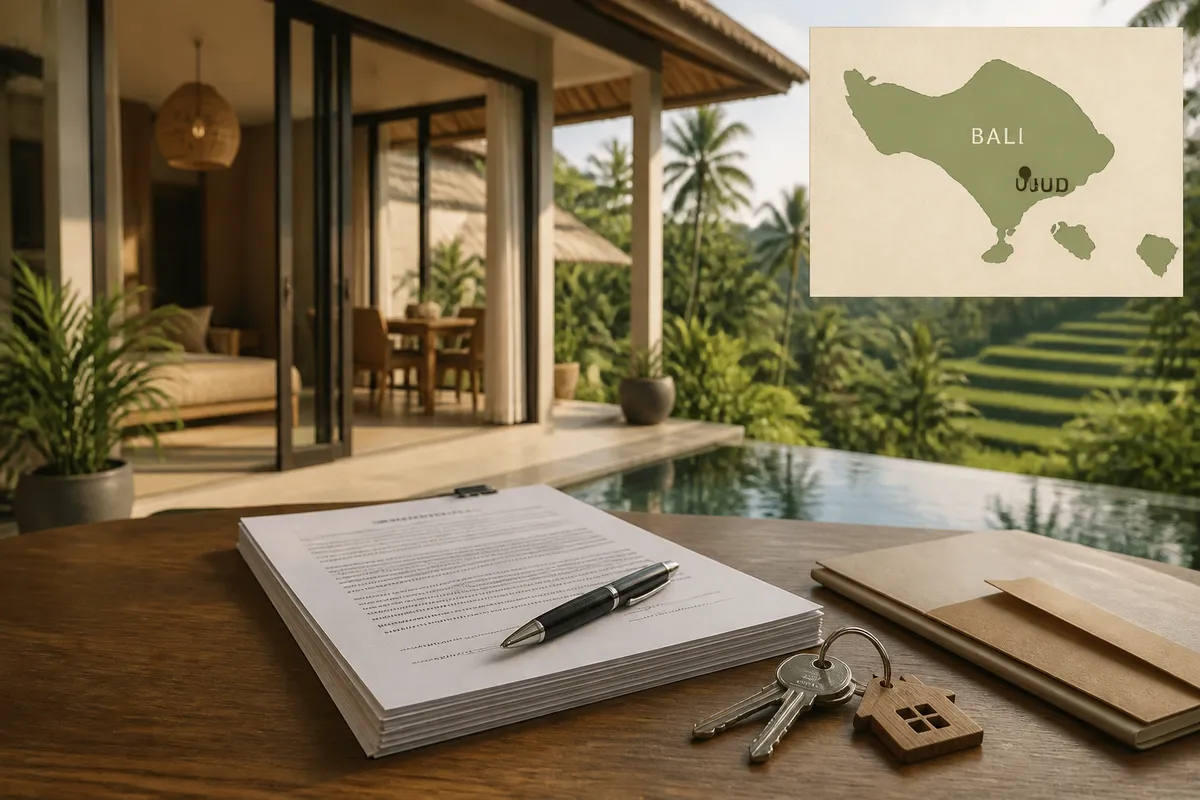 Enlarge image
Can a Foreigner Own a Villa in Ubud? Leasehold Explained
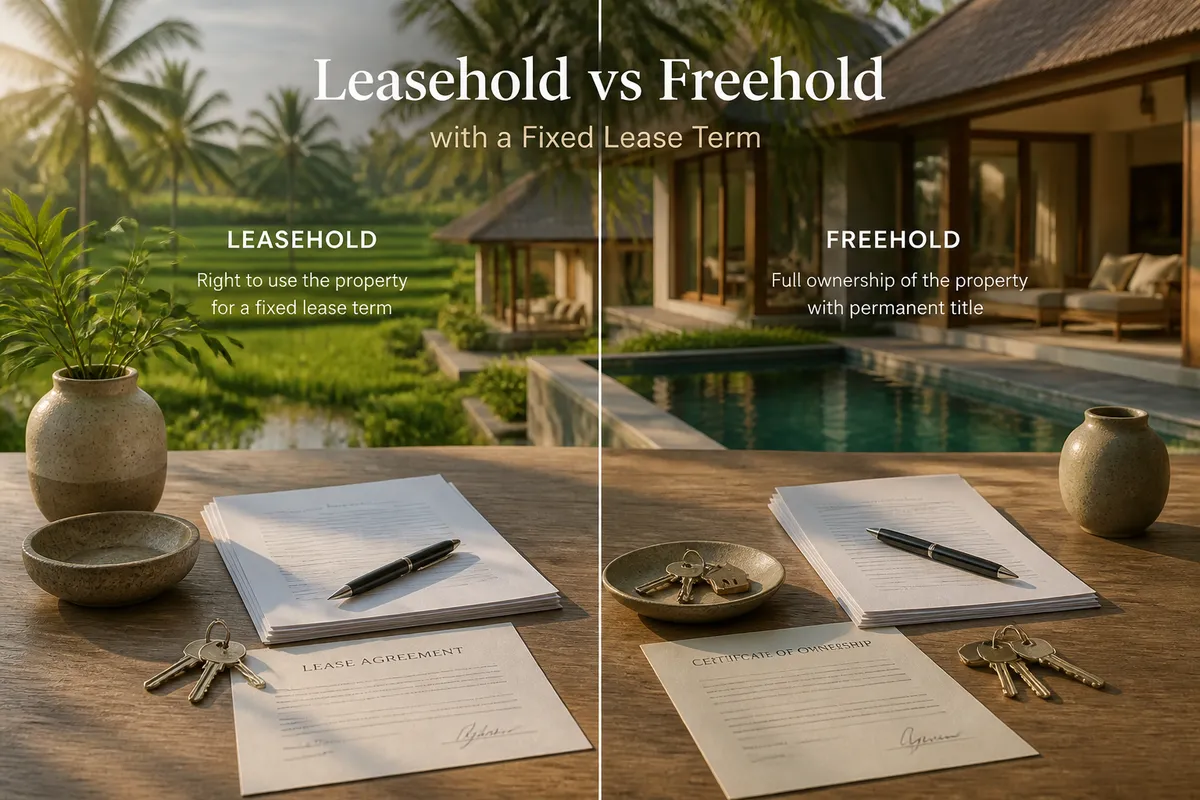
A foreigner does not buy land outright in Ubud; you take the villa on leasehold — a long-term lease of the land and property for a fixed term — rather than through freehold ownership. Leasehold (Hak Sewa) is the default route for most foreign buyers, according to Emerhub — how to buy a villa in Bali as a foreigner, January 2026.
Leasehold (Hak Sewa) is a contract-based right to use a property for a set term, not ownership of the land itself, and Hak Pakai gives a foreigner a registered right to use certain residential property, according to Expatica — foreign property ownership rules in Indonesia, August 2026. In plain terms: instead of freehold, foreign buyers use leasehold — a contract-based right rather than land ownership — or Hak Pakai, according to Expatica — foreign property ownership rules in Indonesia, August 2026.
 Enlarge image
What this means for you in practice: verify the land's leasehold term and that it is held by a notarial deed before you commit a cent. Ask for the notarial lease certificate, check the remaining years on the term, and have an independent Notary and PPATA notary (notaris) certifies agreements, including a land lease. A PPAT (Pejabat Pembuat Akta Tanah) is an official authorised to draw up deeds on land rights. In Bali one person often holds both roles. confirm the zoning and that the document names you. You want to end up holding a notarial deed in your name with a clear remaining term — that paper is what proves your right to the villa. A verbal promise or an unregistered side agreement does not count and gives you nothing to enforce.
How to Buy an Off-Plan Villa in Ubud: Step by Step
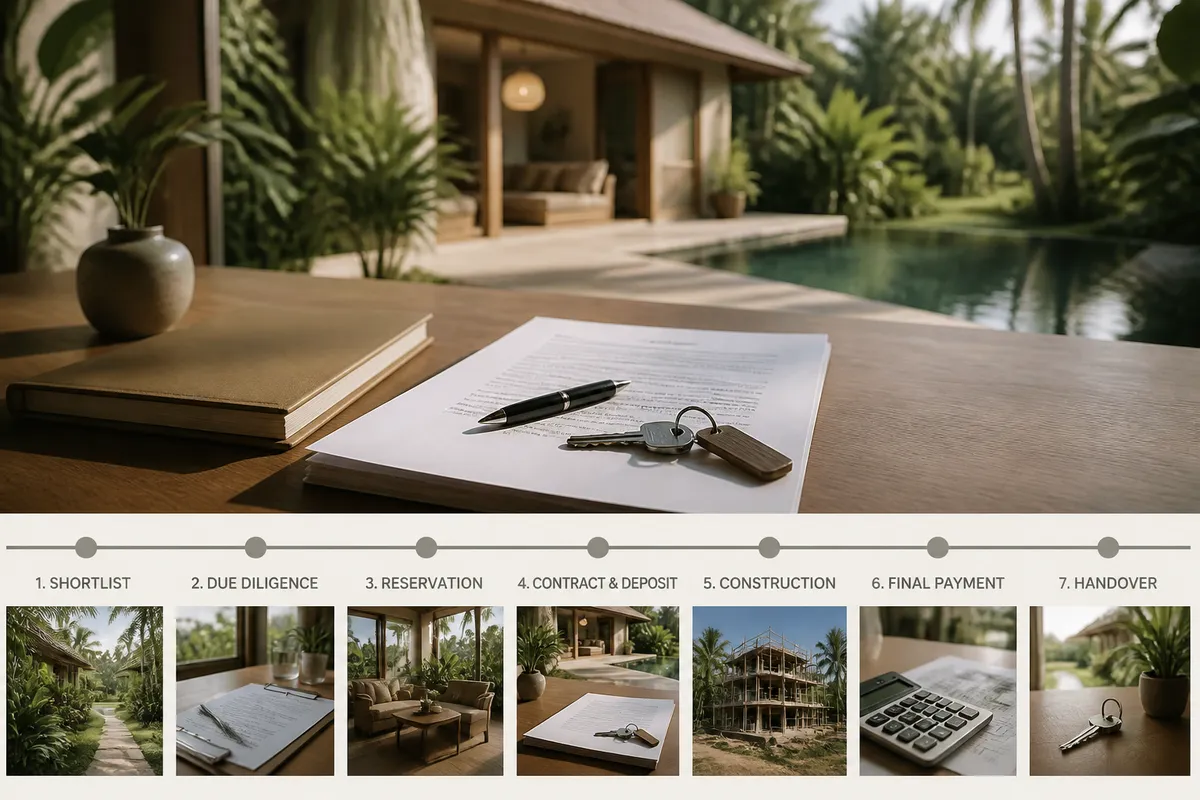
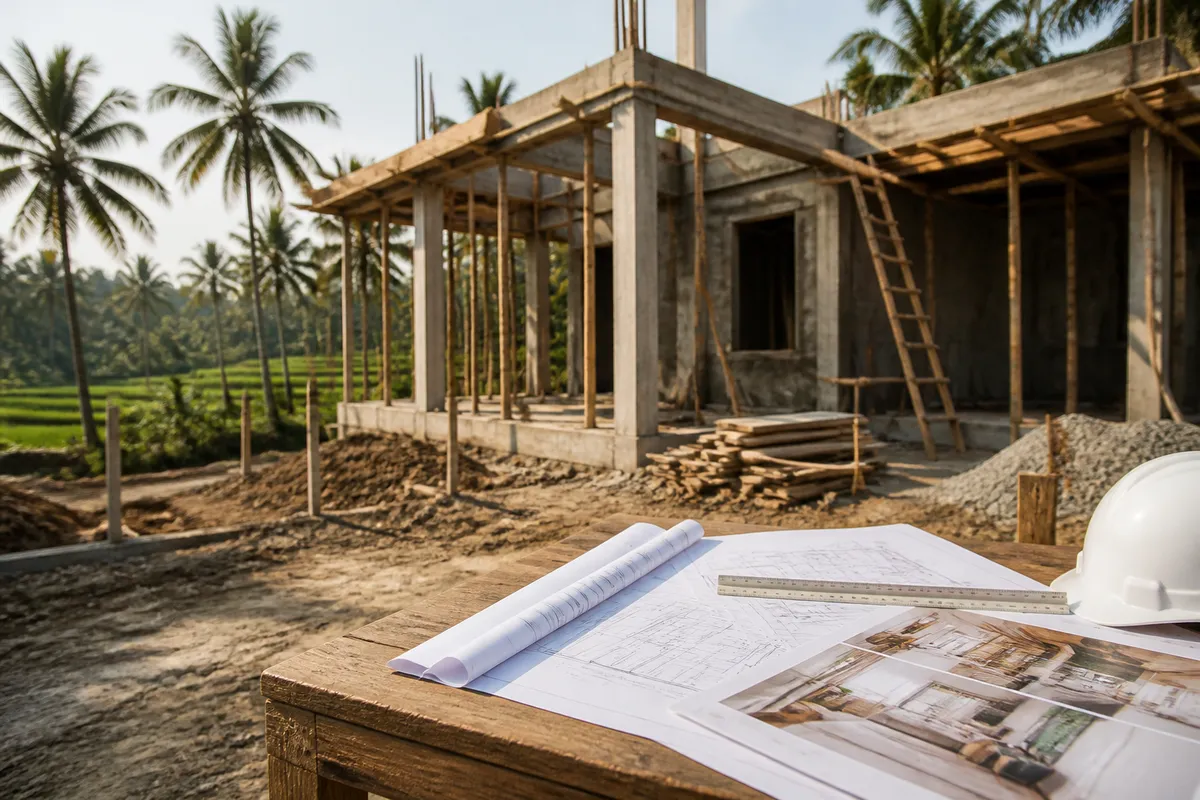
Buying off-plan means reserving a villa before it is built and paying as it goes up. The safe version of this is simple to state: buy off-plan in stages, releasing each payment only after the matching construction stage is verified. That single rule keeps your money tied to real progress instead of promises on a render.
 Enlarge image
Here is the path from first look to keys in hand:
- Shortlist projects. Pick a few off-plan villas in Ubud that match your goal and area, and compare the developer's completed work, not just the brochure.
- Do Legal due diligenceAn independent lawyer’s check before purchase: who holds the land, its zoning and permits, and whether there are mortgages, seizures or court disputes.. Check the leasehold term, the notarial land status, zoning and building permits, and the track record of whoever is building.
- Reserve the unit. Agree the villa, the layout and the Payment by construction stageCITRINE is paid in five instalments, 30/20/20/20/10%, each tied to a completed construction stage rather than a calendar date. in writing before any money moves.
- Sign the notarial lease. The lease is executed in front of a notary so your right is registered, not informal.
- Pay in construction stages. Release each instalment only once the matching stage is finished and documented — foundation, structure, roof, finishing, and so on.
- Handover. You take the completed villa, confirm it against what was agreed, and only then does it become a home you can live in or rent out.
The method that protects you throughout is tying every payment to a completed stage that you can see confirmed by photo and video. If a release does not match a documented, finished stage, hold it. The one thing this does not guard against is an unlicensed builder, so check contractor licensing up front — stage payments to the wrong hands are still money at risk.
Choosing the Right Villa: Location, Pool, Size and Layout
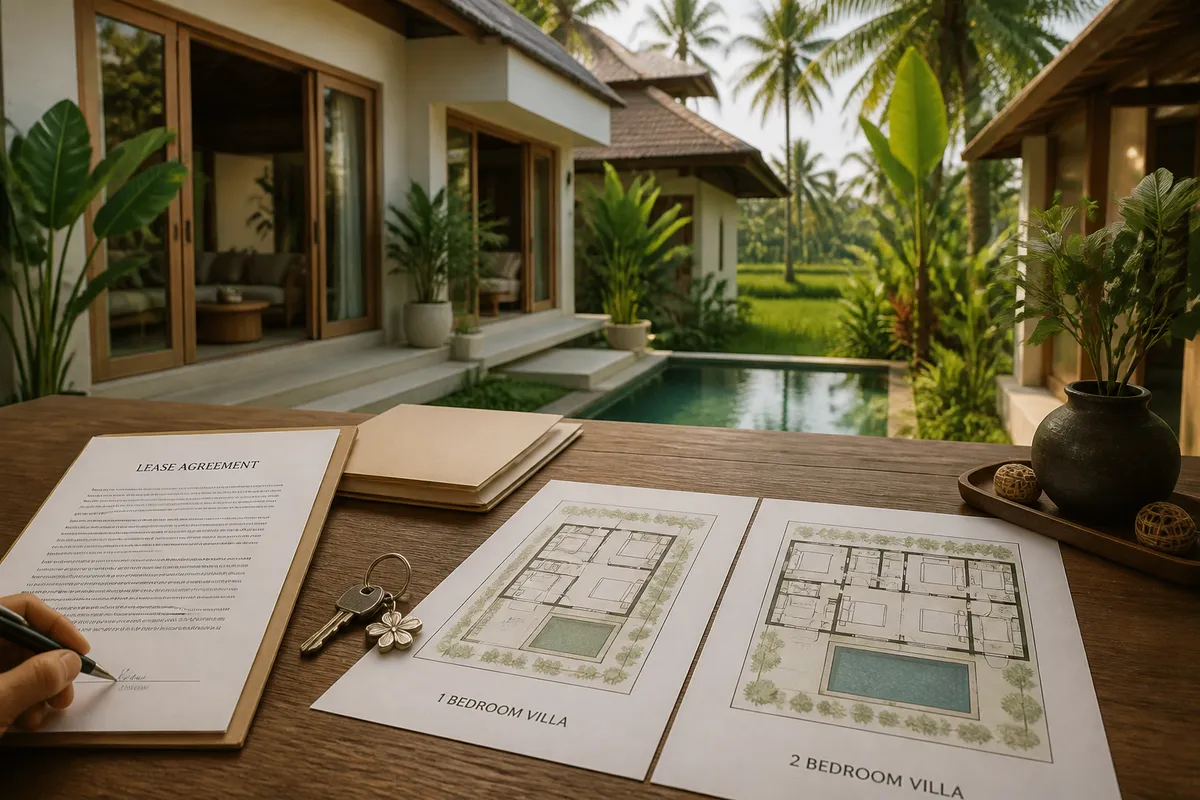
Match the villa to your goal first, then to your taste. A compact one-bedroom rents easily and suits buyers who are mainly after income; a two-bedroom suits longer personal stays and families who want room to spread out. Weigh three things together — location and area, whether it has a private pool, and the size and layout — rather than falling for the photos alone.
 Enlarge image
For a private villa in Ubud with a pool, the private pool is close to non-negotiable on the rental side: it is the feature guests filter for, and a bali Ubud villa with a private pool framed by a rice-field view is what fills a calendar. For your own use, the pool matters less than the number of bedrooms and how the indoor and outdoor space flows.
How to apply the three criteria:
- Location and area. Central Ubud, Pejeng, Lodtunduh and the surrounding villages differ in quiet, access and view. Demand and road access can outweigh raw size, so check the specific spot, not just the regency.
- Private pool. Treat it as standard for a rental-focused villa with a private pool in Ubud; treat it as optional-but-nice for a pure live-in home.
- Size and layout. One bedroom for easy, high-occupancy renting; two bedrooms for longer stays and families.
Imagine two buyers. The first wants rental income and nothing else: a one-bedroom private pool villa close to central Ubud, easy to turn around between guests, is the straightforward fit. The second plans to spend a month at a time with family: a two-bedroom with a study and a bigger garden in a quieter village makes more sense, even if it rents a little less often. Same budget frame, different right answer — because the goal is different.
Costs Beyond the Purchase: Taxes and Fees
Owning and renting out an Ubud villa costs more than the villa itself, and it pays to map those running costs before you buy. These are ongoing items tied to operating and letting the property — they are separate from, and not part of, the purchase figure the sales manager quotes you.
 Enlarge image
The main recurring categories look like this:
| Cost category | What it covers | When it applies |
|---|---|---|
| Guest-stay tax | Tourist tax levied on paid guest nights | Only while the villa is rented out |
| Management fee | A share of rental revenue for running and marketing the villa | On rental income, once let |
| Maintenance and utilities | Pool, garden, repairs, power, water, internet | Ongoing, whether you let or stay |
| Lease obligations | Any charges tied to the leasehold terms | Per the notarial lease |
Treat the exact rates as something to confirm in writing for your specific project, because they vary by operator and by the terms in your contract. The point for planning is structural: budget for a tax on guest nights and a management share of revenue on top of day-to-day upkeep, so your return estimate is honest rather than gross. Ask for the full schedule of taxes and fees before you sign, not after handover.
A simple way to keep that estimate honest is to work from net income rather than gross: net yearly income = gross rental revenue − guest-stay tax − management share − upkeep. As an illustration, if gross revenue is 100 units for the year, and your written terms set the tax and the management share at T and M percent of it, with upkeep of U units, you keep 100 × (1 − T% − M%) − U units. Take T, M and U from your contract; the aim is to start from the net figure, not the gross one.
Rental Income and Property Management
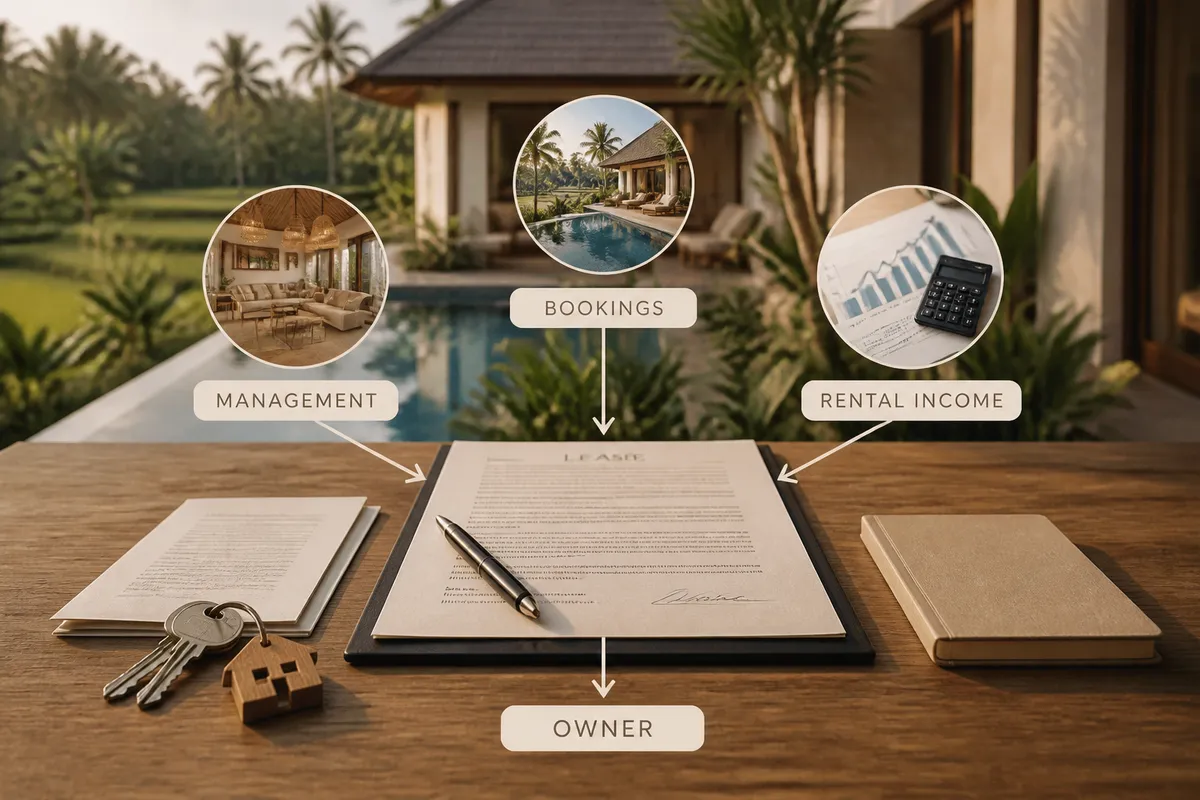
Renting out an Ubud villa almost always runs through a Management companyThe company that runs a villa as a rental after handover: bookings, guests, cleaning, maintenance and the monthly owner report. It is paid a share of revenue. rather than you juggling bookings from abroad. The manager markets the villa, handles guest communication, check-in, cleaning and upkeep, and reports the income to you. Rental income only starts once the villa is built and handed over — an off-plan unit earns nothing while it is still a construction site.
 Enlarge image
Choose the management arrangement as carefully as the villa. Look for a licensed operator with a real track record on comparable villas, clear reporting, and a fee that is tied to revenue so their interest lines up with yours. Agree who covers what — cleaning, repairs, restocking — so the net figure you receive is predictable.
One caution worth stating plainly: no one can promise you a guaranteed yield, and you should be sceptical of anyone who does. OccupancyThe share of nights a villa is booked over a period. Green Harmony: 88.1% on average, January–July 2025. Past results, not a forecast. swings with the season, the area and how the villa is run. A sensible owner plans around a range, keeps a reserve for quiet months and maintenance, and judges the operator on evidence rather than a headline number.
Buying Remotely and Safely: Stage Payments and Reports
You can buy a villa in Ubud without ever flying in, provided the process is built for distance. The mechanism that makes a remote purchase safe is the same discipline as off-plan buying, applied strictly: money moves only against verified progress, and that progress is documented so you can check it from your laptop.
 Enlarge image
For a remote deal, insist on:
- Notarial contracts, signed properly. Have the lease and purchase agreements executed through a notary, with remote signing arranged correctly rather than on trust.
- Stage-based payments. Each instalment released only after the matching construction stage is finished and confirmed — never a large sum up front.
- Regular photo and video reporting. Dated progress media on a predictable schedule, so "it's coming along" is replaced by evidence you can archive.
- Licensing checks. Confirm the contractor and developer are licensed before the first transfer, since reporting shows you progress but not legitimacy.
Here is what a stage-by-stage release schedule looks like in practice. It shows the stages and the evidence you should receive; the amounts themselves come from your contract.
| Stage | What the report should show | Payment released |
|---|---|---|
| Foundation | Dated photos of the finished foundation and the contractor's written confirmation | The instalment tied to the foundation |
| Structure | Photos and video of completed walls and floors | The next instalment |
| Roof | Video of the closed roof and sealed openings | The next instalment |
| Finishing | A photo and video walkthrough and an agreed list of remaining fixes | The final instalment, at handover |
Run these as a checklist, not a wish list. If a seller resists tying payments to verified stages or balks at regular documented reports, treat that as the answer. For a buyer who is thousands of kilometres away, the paper trail and the staged schedule are the protection — they turn a leap of faith into a series of small, checkable steps.
Our Track Record: Delivered Projects and Guest Reviews
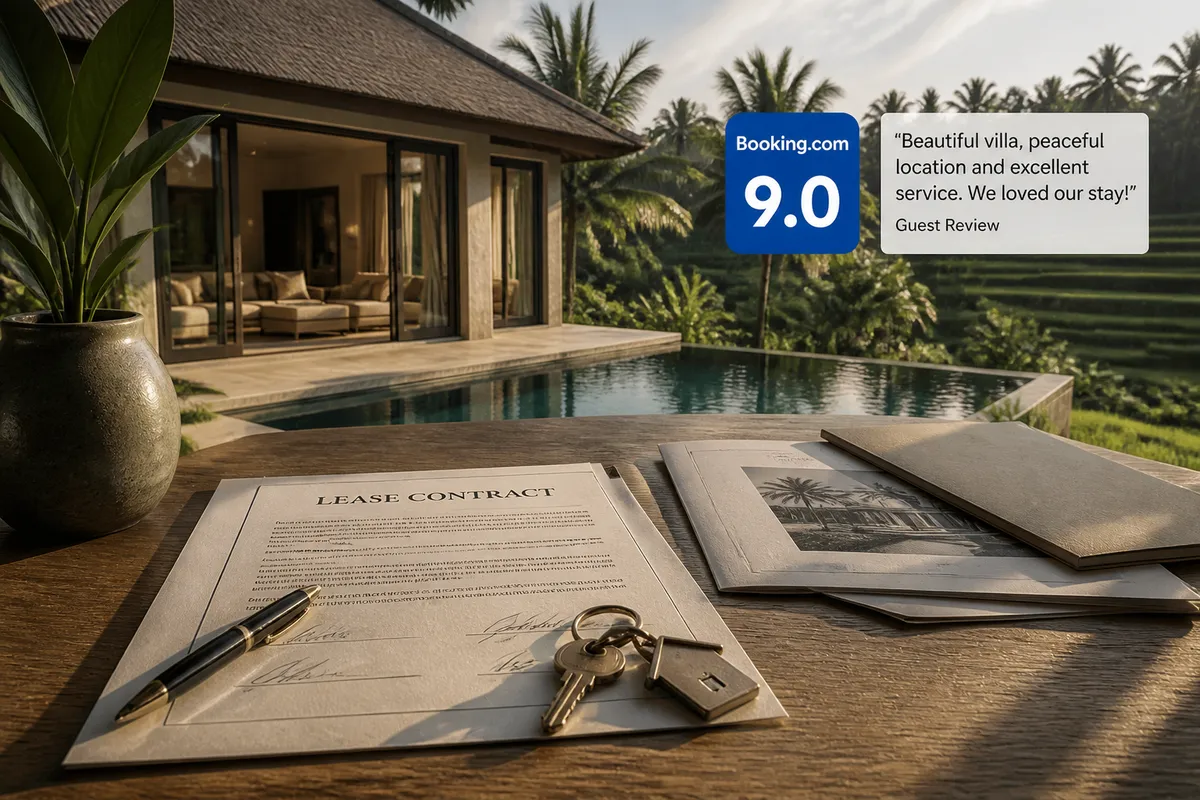
The honest test of a developer is a finished villa with real guests in it, not a render. KAMRITA delivered its Green Harmony project in Pejeng, Ubud — four one-bedroom villas with a study, sold out four of four off the renders and handed over in October 2024. That is a project taken from drawings to keys, with every unit spoken for before completion.
 Enlarge image
The guest side backs that up. Green Harmony holds a 9.0 "Superb" rating on Booking.com from 12 reviews, as of October 2026. Behind the average sit full-mark stays: guests left 10/10 Booking.com reviews in 2026, praising the rice-field view, the cleanliness, the privacy and the pool.
 Enlarge image
When you weigh any developer, do the same thing here: ask which projects are actually finished, how fully they sold, and what paying guests say afterwards. Delivery, sell-through and independent reviews together tell you far more than a glossy brochure ever will.
Frequently Asked Questions
Why should families stay in an Ubud villa? A private Ubud villa gives a family its own space, gate and often a private pool, which is safer and calmer than a shared hotel. The extra bedrooms and enclosed garden suit longer stays, and Ubud's quieter inland setting away from the beach strip fits travelling with children. A two-bedroom layout in particular leaves room to spread out.
Can a foreigner legally own a villa in Ubud, Bali? Yes, but through a long-term lease rather than outright land ownership. You hold the villa on leasehold for a fixed term, confirmed by a notarial deed in your name, instead of owning the land as a freehold. Always check the remaining term and verify the deed with an independent notary before you commit.
How does buying an off-plan villa in Ubud work? You reserve a villa before it is built and pay in instalments as construction progresses. The sequence runs shortlist, due diligence, reservation, notarial lease, staged payments and handover. The safeguard is releasing each payment only after the matching construction stage is finished and documented.
What ongoing costs come with owning and renting out an Ubud villa? Expect a tax on paid guest nights, a management fee taken as a share of rental revenue, and routine maintenance and utilities — all separate from the purchase price. Taxes and management apply once the villa is let; upkeep runs whether you rent or stay. Get the exact rates in writing for your specific project before signing.
How can I buy a villa in Ubud remotely and safely? Buy through notarial contracts, pay in stages tied to verified construction, and require regular dated photo and video reports. Confirm the developer and contractor are licensed before any money moves. Done this way, a remote purchase becomes a series of small, checkable steps rather than one leap of faith.
In Short: Your Next Step
Buying an Ubud villa as a foreigner is very doable: you take it on leasehold confirmed by a notarial deed, buy off-plan with payments tied to verified stages, budget for the taxes and management fees that come with letting it out, and judge the developer on finished projects and real reviews. Take it in that order and the decision stops feeling risky and starts feeling like a plan.
If you want to pressure-test a specific project or get the full schedule of terms and costs, talk to a Bali-based team who can answer in detail — KAMRITA's sales manager replies on WhatsApp and Telegram within 15 minutes, Bali time, GMT+8. No obligation; just the clear answers you need before you commit.
Next step
We build villas in Ubud and write about what we check on our own projects: land, permits, construction and the numbers of completed villas. About the team